4T|Phys 2023: BIOPAC Shares Tools, Trends, Techniques & Technology at UCSB

They hailed from across the globe, from Arkansas to Zanzibar and all points between. Students, teachers, researchers, and innovators gathered on the campus of UC Santa Barbara, overlooking the Pacific Ocean. They came to learn, share, and explore breakthroughs and best practices in physiology and related fields. 4T|Phys kicked off July 17 under clear California summer skies, an idyllic setting for discovering the Tools, Trends, Techniques, and Technology driving physiology education and exploration.

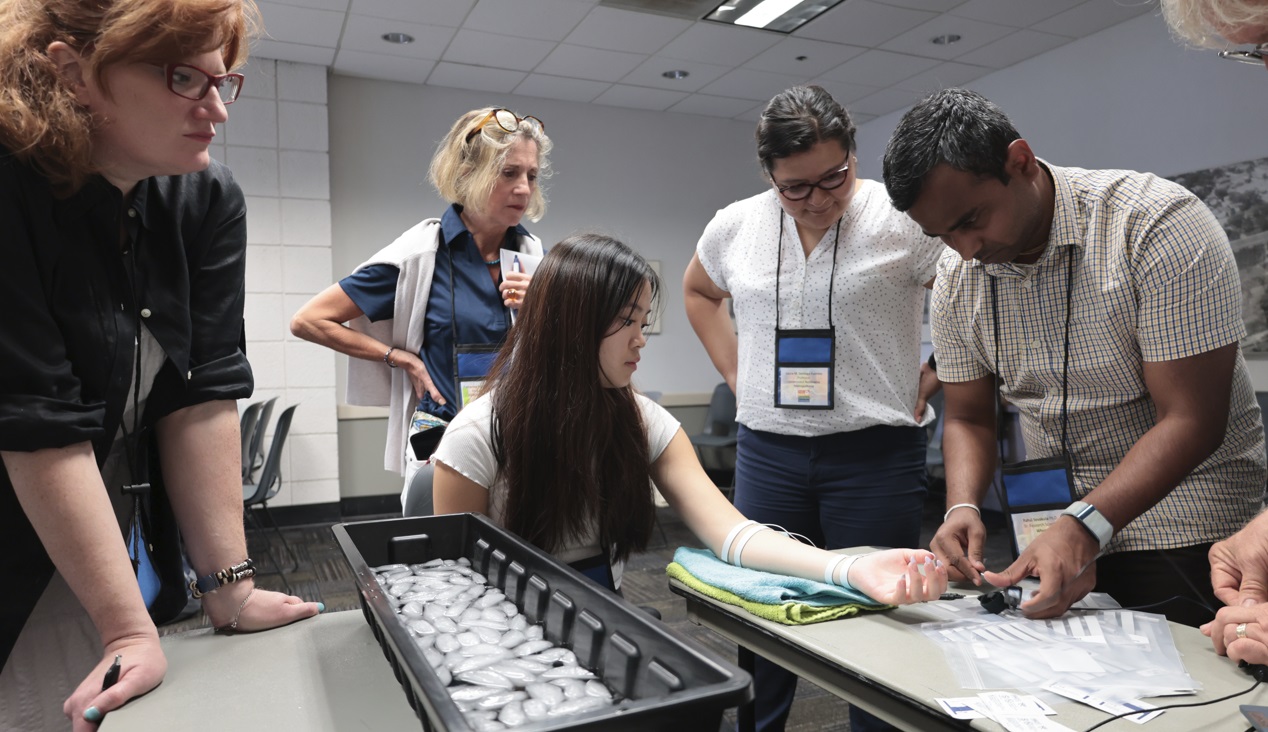
4T|Phys 2023 was the third installment in BIOPAC’s highly successful series of biennial industry conferences that began in 2017. After a two-year hiatus during the global Covid-19 pandemic, 4T came roaring back this summer with more workshops, more tracks, more sponsors, more presenters, and more countries represented than ever before. Over the course of three days, nearly 100 attendees participated in hands-on sessions with some of the top minds in physiology research, experiencing the latest tools for gathering and analyzing data.

BIOPAC’s in-house experts were joined by an array of authorities from the fields of physiology, psychology, imaging (fNIRS and fMRI), neuroscience, cardiovascular research, eye tracking, virtual reality (VR), biology, and engineering. Participants took part in workshop schedules drawn from five separate tracks that included fundamentals, which focused on the basics of data acquisition and analysis. The research track took attendees on a deeper dive into techniques and technologies, including recording evoked potentials, screen-based eye tracking, impedance cardiography using trans-radial bioimpedance velocimetry (TREV), stimulus presentation, exercise physiology, and many others. Participants were also able to tour UC Santa Barbara’s state-of-the-art Brain Imaging Lab to see up close how BIOPAC products are being used in both functional MRI (fMRI) and TREV studies.

“It was an incredible experience that left a lasting impact on me by helping me to understand more about physiological data collection and analysis,” said Dr. Parth Trivedi, a 4T|Phys attendee. “The choice of presenters and the topics covered were truly inspiring, offering valuable knowledge and fresh perspectives that enriched my understanding.”

4T|Phys 2023 Attendee MapThis year’s conference featured several new tracks such as a dedicated VR track led by partner company WorldViz. The WorldViz team showcased virtual reality solutions in a series of workshops that introduced how VR is being integrated in physiology and psychology research, explained how to create effective and immersive VR experiments, and demonstrated their latest PRISM technology for creating fully immersive projected 3D virtual environments.

Several other partner companies introduced their technologies and products both in the 4T exhibition hall and in workshop sessions. Argus Science presented their ETVision eye-tracking glasses that synch seamlessly with AcqKnowledge. Cognixion demonstrated the Cognixion One Axon-R—Research Edition wearable BCI-AR computing platform, which is being used to help individuals with neurodegenerative conditions and severe motor impairments communicate and interact with their environments assisted by augmented reality. Seenel Imaging showed off their MedelOpt Systems for whole-head EEG with fNIRS, including new VR integration. Participants also got a chance to try on the Research Ring by Senstream, a new user-friendly wearable research ring, which allows easy recording of EDA, PPG, Temperature, and ECG signals. CNSystems showed off the company’s NIBP continuous noninvasive blood pressure (NIBP) and hemodynamics devices.

If you missed the educational and networking opportunities at 4T|Phys 2023, don’t despair. We will be back again in a few years, bigger and better than ever. Watch this space for updates on our next installment. In the meantime, see our Video Tutorials and Webinars On Demand for trainings and seminars on our products and partners.


Make sure you never miss a BIOPAC event and keep up with the latest Tools, Trends, Techniques, and Technologies by contacting your local BIOPAC sales representative.

Biopac Student Lab | What I Learned This Summer

A Student’s Perspective

Guest post by Ashley F.

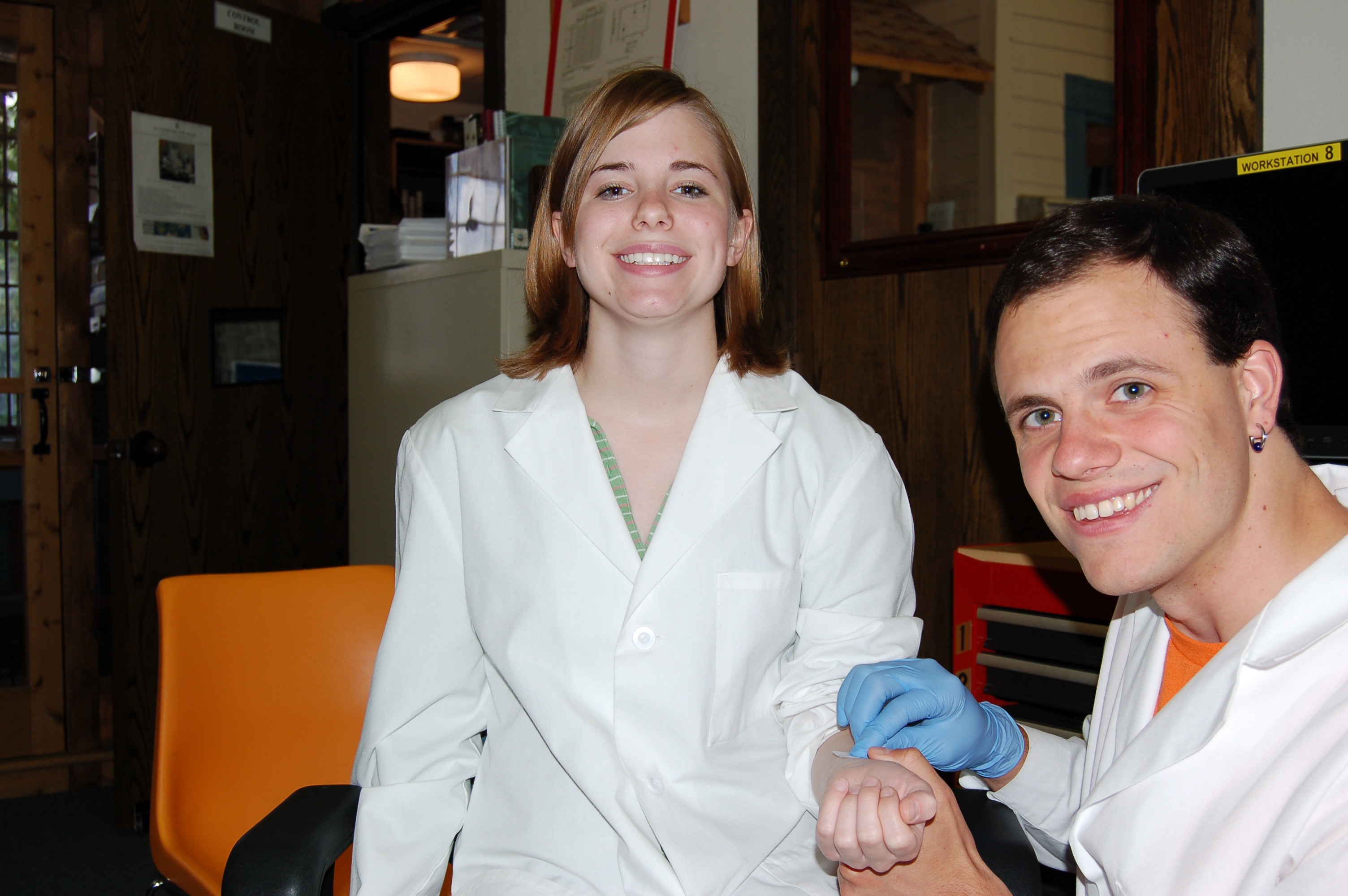
Like many of my university peers, I wrapped up my freshman year of college working a summer internship in hopes of gaining valuable professional experience. Rather than relaxing on the beach, I occupied my time between June and August with electronic breadboards and ice bucket plunges. All this took place at BIOPAC where I was tasked with reviewing the BSL PRO Lessons, helping the company continue to refine and improve these teaching aids.

Let me start by confessing that I am not a physiology or anatomy major, but rather a development and psychology major. Given this difference, I did not expect to find that so many of the BSL PRO Lessons connect to what I am studying. BSL PRO Lessons stand out compared to your average textbook for multiple reasons. For me, the primary difference is that with BSL PRO Lessons, you get to watch the data take shape in real-time. And it’s not just random data, but data from your own body—your heart beating, your finger twitching, your eyes tracking a pendulum. Because the data is from you and not a textbook, the lessons are more interesting to analyze.

Throughout the summer, I worked through each “human” BSL Lesson, gaining experience with the software, equipment, and workspace. Each lesson includes a ‘background’ section that provides context to the lesson and connects each one to different concepts. This context makes the data from each lesson relevant to more disciplinary studies than just physiology and anatomy, which in turn broadens the student’s knowledge. Because BIOPAC wanted to test the materials under realistic student lab conditions, I wasn’t given much guidance on how to approach individual lessons. Rather, I would simply read the manual and follow the instructions, which turned out to be surprisingly easy as I figured out how to do most of it on my own.

With a total of 39 BSL PRO lessons, you would expect at least a few to be quite similar. And yet, BIOPAC understood the importance of unique lessons and ensured that each one had a different background section, used different equipment, and covered a different topic.

woman submerging head in cold waterEach lesson includes fun concepts to keep you engaged, like dunking your head in cold water to see how your heart rate changes in Lesson H08: Dive Reflex, using equipment to make your finger twitch in Lesson H06: Finger Twitch, or testing and timing your reflexes in H16: Reflexes & Reaction Time.

While each lesson is unique and covers a different topic in physiology and anatomy, the lessons do follow a clear progression as you move from BSL PRO Lesson 1 to 40. They start shorter, utilizing more basic concepts and equipment. Then, as you progress through the lessons, you begin to work through increasingly complex physiological concepts until you end on a lesson involving the use of a breadboard. This last lesson involves nine separate labs, each as involving as the earlier individual lessons. This amount of work may sound daunting at first, but the skills picked up while completing the previous lessons leave you well-prepared to complete the final lesson and analyze clear data.

Working through BSL PRO Lessons is a unique and interactive experience that allows students to learn, connect, and analyze personalized data from a broad range of physiological and anatomy concepts, leaving you with a well-rounded and contextualized education experience.


Learn more about BIOPAC’s education solutions, including complete teaching systems for a variety of life science disciplines. BIOPAC also provides a wide range of research systems for recording, displaying, classifying, and analyzing physiological signals & measurements.

BIOPAC Systems, Inc. helps life science researchers and educators
measure physiology anywhere, any time, from any subject.
Visit us at www.biopac.com.

Curriculum Roadmap: Guiding Students with HAPS Learning Goals

When planning any journey, choosing the right route can mean the difference between reaching one’s destination or becoming lost in the wilderness. It helps to know the purpose of the trip; is it merely to get from point A to point B, or is the journey itself as important as reaching the destination? What stops need to be made along the way?

These questions can also resonate for instructors as they guide students along their academic journeys, as the goal of instruction is not limited to just reaching a specific destination. It is often about what occurs along the way: experiences, obstacles, and challenges encountered that shape the student and their understanding of the subject matter.

To help students and instructors on the path to better life science education, BIOPAC created a roadmap with its curriculum for the Biopac Student Lab systems (BSL) for life science instruction. The BSL curriculum comprises more than 65 lessons that serve as carefully plotted points on a path to an in-depth and invigorating understanding of general life science disciplines.

This curriculum follows a route established by the Human Anatomy and Physiology Society (HAPS). HAPS has created a set of learning goals, guidelines, and outcomes that bring together a range of topics covered in Anatomy and Physiology I & II courses at the university level for both clinical and academic degree programs.

The advantages of following such a path are fourfold. First, students are provided with an outline of course expectations. Just as every journey should begin with a clear understanding of where one is going, knowing learning goals allows students to focus their efforts on what matters most. Furthermore, instructors are encouraged to relate learning goals to real-life applications to provide meaning in a relatable context.

Secondly, with straightforward goals in mind, the instructor will find it easier to manage course design by focusing on key elements of their curriculum. These can include the following:

  • Order of topics to cover
  • Pedagogical strategies
  • Lab experiments
  • Periodic assessments that help students stay on track

Taking this a step further, by following HAPS’s goals, guidelines, and outcomes, instructors will be better equipped to plan a comprehensive program of study. Well-defined goals allow the instructor to build a solid foundation for future courses and guide learning specific to the program’s discipline. Additionally, it can reveal redundancies, overlaps, and gaps in the degree track.Goal Planner

Lastly, just as a good cartographer’s map provides evidence of where the traveler has journeyed, carefully plotted goals, guidelines, and outcomes trace the students’ track within the academic program. This provides valuable information for accreditation while ensuring students graduate with the necessary skills for their chosen field in the sciences.


To learn more about how the BSL system and curriculum can help students and instructors get the most out of anatomy and physiology courses, contact BIOPAC today.

ECG – The Little Wave You Can’t Live Without

For millennia, ancient healers across the globe long recognized the human heart as immeasurably vital to human life. Other organs may take an occasional time out, but not the heart. This sinewy fist-sized pump contracts and relaxes an average 60 to 80 beats per minute and faithfully repeats this cycle some two and a half billion times over an average human lifespan, constantly driving and recirculating lifeblood through 100,000 miles of veins, arteries, and capillaries. It’s a monumental task that we take for granted, but if the process stops for more than a few minutes, so will this mysterious force we call life.

It’s intriguing to consider the wonder with which the ancients must have contemplated this organ that thumps so audibly. They knew it was of critical importance, and over the centuries learned its form and surface physiology, but what did they imagine animated it? What force kept the heart moving so steadily and faithfully, while remaining implacably divorced from the consciousness of its host? (Go ahead. Try to stop your heart. On second thought, don’t.)

The answer, in a word, is electricity. Although the stethoscope, invented in 1816 by French physician René Laennec, augmented audible heart sounds, it wasn’t until 1901 that Dutch physician Willem Einthoven developed a “string galvanometer,” capable of reliably recording the heart’s electrical activity. Einthoven’s work established a standard configuration for recording the electrocardiogram (ECG) and garnered him the Nobel Prize in 1924. Because the ECG reflects electrical activity, it is a useful “picture” of heart normality or abnormality through the observation and analysis of various distinct components of the cardiac cycle. If there are interruptions of the electrical signal generation or transmission, the ECG changes. These changes can be useful in diagnosing changes within the heart.

The methods for recording ECG have become increasingly sophisticated with the advent of digital technology and have put state-of-the art acquisition and analysis of ECG within reach of not only clinicians, but also researchers and educators. Wired in-lab systems such as the BIOPAC MP160 System with AcqKnowledge software are widely used for Research applications, while the MP36 System with Biopac Student Lab software are the industry standard for physiology education around the globe. Wireless systems such as BioNomadix or BioNomadix Smart Center can be used to collect ECG and other body signals in an untethered environment and the BioNomadix Logger is a great solution for acquiring ECG and other body signals over extended periods outside the lab.

We have come a long way since our forebears contemplated the mysteries of the vital mechanical wonder that beats in every chest, and we now have a myriad of accessible options for unlocking its secrets.

For further exploration of ECG, we invite you to enjoy the following comprehensive free ECG webinars:

Recording Great ECG

HRV & RSA – Fundamental ECG Analysis Techniques

BIOPAC offers a wide array of wired and wireless equipment that can be used in your research. To find more information on solutions for recording and analyzing signals such as ECG, heart rate, respiration and more using any platforms mentioned in this blog post, you can visit the individual application pages on the BIOPAC website.


Think As Scientists Think—Empirical Research Skills

Learning to think as scientists think is empowering and drives this process and “Hard” and “soft” research skills combine well with Biopac Student Lab Lessons.

(Photo © 2016 Knowledge Growers, Inc.)

By Howard Iver Thorsheim, Ph.D., St. Olaf College

“Hard” and “soft” research skills combine well with Biopac Student Lab Lessons; for example:

  • Working as members of cooperative-learning teams;
  • Learning about basic psychophysiological measures;
  • Organizing supplies;
  • Following a protocol to greet a participant;
  • Explaining proposed procedure, and obtaining written informed consent using a form they draft;
  • Preparing participant, placing electrodes, and manipulating independent variables;
  • Debriefing participant;
  • Analyzing and graphing results;
  • Writing up research results in APA format.

Since the goal is learning skills for thinking, many of the usual requirements for rigorous research headed for publication can be relaxed for beginning students. This can motivate students for advanced student research honors projects or faculty/student research. Some examples of requirements that can be relaxed include naive participants (team members can serve as experimental participants in each other’s explorations—availability samples), sample sizes large enough to attain statistical power (instead two or three can be sufficient), and random assignment to conditions.

Learning to think as scientists think is empowering and drives this process, and some examples include students thinking about:

  • Articles of interest students find in data base searches that lead to their own research questions to explore;
  • Which psychophysiological measures they have practiced would provide information to help them learn more about their research question;
  • What they want their participants to do;
  • Key issues of experimental and statistical control, and
  • Any other equipment or supplies they might need to arrange for in addition to what is available within the limitations of available apparatus and facilities.

Before they may proceed, beginning students present their thinking on such issues to me as their consultant.

I provide a rubric with many tips, such as noting what they observed during the experiment that could have unintentionally influenced the results, describing strengths and limitations of their conclusions based on their findings, and answering the “So what?” question to extend their findings into their own life and think about the implications such findings might have for them.

See following for more ideas for teaching empirical research skills to help students think as scientists think, with research support:

Thorsheim, H. I. (2015). Experimental psychology. In D. S. Dunn (Ed.), The Oxford Handbook of Undergraduate Psychology Education. New York: Oxford University Press, 387-401. (Focus is.)


Learn more about BIOPAC’s education solutions, including complete teaching systems for psychophysiology and the life sciences. BIOPAC also provides a wide range of research systems for recording, displaying, classifying, and analyzing psychophysiological measurements.

BIOPAC Systems, Inc. provides life science researchers and educators with data acquisition and analysis systems that inspire people and enable greater discovery about life. Visit us at www.biopac.com.

Professor Thorsheim is a licensed Psychologist, educator, and author. He has published or presented over 125 papers, journal articles, books, book chapters or monographs, and received a patent in 1985 as a co-inventor for an educational book design with interactive elements. His work has been funded by marquee foundations across the globe. His most recent work is Doing Psychophysiology: Getting Started, available from Knowledge Growers, Inc., available as an iBook download in 51 countries.

How to Promote Cooperative Thinking

By Howard Iver Thorsheim, Ph.D., St. Olaf College. How to promote cooperative thinking of team members doing psychophysiology, draw from their richly diverse interests and ideas, and in the process teach a “soft” skill that could transfer to later life.

(Photo © 2016 Knowledge Growers, Inc.)

By Howard Iver Thorsheim, Ph.D., St. Olaf College

Howard Iver Thorsheim is Professor of Psychology and Neuroscience at St. Olaf College, Northfield, Minnesota, USA. In these blogs he offers his first-person insights into effective teaching techniques gleaned from a combination of scholarly research and over 40 years in the classroom.

The Challenge:

The challenge was how to promote cooperative thinking of team members doing psychophysiology, drawing from their richly diverse interests and ideas, and in the process to learn a “soft” skill that could transfer to later life.

The Solution:

I adapted a tried-and-true group process to help team members doing psychophysiology research identify diverse ideas and think about their group project in a cooperative way. (The technique can be scaled up to engage many teams simultaneously). The technique is called the Nominal Group Technique, first developed by DelBecq and Van de Ven (1975).* The reason for the word nominal is evident in Step 1.

Step 1. Each student in a team was given a stack of 25 or so Post-it® notes. Because each student is working alone at this point, they are a group in name only (i.e., nominally a group). Their homework assignment was to think independently about ideas and interests that came to mind for them, and jot down a few words identifying their idea or interest on each of the Post-it notes. Interaction comes in step 2.

Step 2. The next class, the team members gathered together near a whiteboard. In a round-robin interactive fashion, one at a time, the students placed their Post-it notes on the board: One person started by placing the top Post-it from their stack on the board; the second person placing their first Post-it note close or further away from the first person’s Post-it note, depending upon their sense of closeness of the ideas. So it goes with the other students, with the round robin continuing until all Post-it notes are placed on the wall. Step 3 is the convergence!

Step 3. Again in a round-robin fashion, students take turns with a non-permanent marker drawing dashed lines around clusters they observe, and jotting down their idea for a name for each cluster. The result from the large group of individual ideas or interests becomes a smaller cluster of related ideas. The result is more coherence of ideas, engagement, social cohesion, and team focus. It works every time in any team or group!

See how the Center for Disease Control adapts the technique in this Nominal Group Technique (NGT) Evaluation Brief.

*Delbecq, A. L., Van de Ven, A. H., & Gustafson, D. H. (1975). Group techniques for program planners: a guide to nominal group and Delphi processes. Glenville, Illinois: Scott Foresman.


Learn more about BIOPAC’s education solutions, including complete teaching systems for psychophysiology and the life sciences. BIOPAC also provides a wide range of research systems for recording, displaying, classifying, and analyzing psychophysiological measurements.

BIOPAC Systems, Inc. provides life science researchers and educators with data acquisition and analysis systems that inspire people and enable greater discovery about life. Visit us at www.biopac.com.

Professor Thorsheim is a licensed Psychologist, educator, and author. He has published or presented over 125 papers, journal articles, books, book chapters or monographs, and received a patent in 1985 as a co-inventor for an educational book design with interactive elements. His work has been funded by marquee foundations across the globe. His most recent work is Doing Psychophysiology: Getting Started, available from Knowledge Growers, Inc., available as an iBook download in 51 countries.

Start the First Class with EDA and Emotional Responses!

By Howard Iver Thorsheim, Ph.D., St. Olaf College. I wanted to start the first day of my class with an activity that would engage students’ curiosity and enthusiasm, to set the stage for introducing the course and going over the syllabus!

By Howard Iver Thorsheim, Ph.D., St. Olaf College

Howard Iver Thorsheim is Professor of Psychology and Neuroscience at St. Olaf College, Northfield, Minnesota, USA. In these blogs he offers his first-person insights into effective teaching techniques gleaned from a combination of scholarly research and over 40 years in the classroom.

I find Electrodermal Activity (EDA) to be a great way to demonstrate psychophysiology measurement at the beginning of a course: students easily understand it. It takes little time to set up and record because it only involves two sensors on the finger tip pads. It works every time as a “window” to emotions with clear responses to a variety of stimuli (e.g., visual, auditory, gustatory, olfactory).

I show students a picture of a rock climber climbing a cliff, then ask them to jot down some notes of what they might feel when climbing like the woman pictured, and then buzz with a person sitting next to them about what they wrote. I ask for a show of hands of who has mentioned the bag hanging from the climber’s belt. Depending on the amount of time I choose to devote to the activity, I lead the entire class through a number of probing questions; for example:

“Who knows what the bag is for?” (Chalk for fingers.)

“Why does the climber use chalk?”  (Reduce slipperiness from sweat.)

“Why do fingers get slippery?” (Emotion.)

“What other people encounter emotion daily?”

I then set the stage for EDA: changes in skin conductivity are due to the amount of sweat in sweat glands of the skin, which are produced by the sympathetic branch of the autonomic nervous system responding to emotion.

I explain to the class that I will be the first volunteer, and guarantee that no shock is involved using BIOPAC equipment. I connect electrodes on the volar pads of my index and middle fingers, and take a deep breath, which will generate EDA. Then I tell the class I will think of emotion-producing situations, and ask them if they can see any EDA detected by the equipment. There will be a few good chuckles because in anticipation of doing so, my response will already appear. Two of several easy classroom measurements of EDA include latency (about 1 to 3 seconds between a stimulus and beginning of the electrodermal response), and peak amplitude (the maximum size of the response). My eBook Doing Psychophysiology–Getting Started on the Apple iBooks Store has a graphic narrative and a one-minute video explanations about EDA, as well as other psychophysiology measures you can show your students. The Biopac Student Lab system also includes two lessons in which students can engage in interactive learning activities while measuring EDA; a lesson on the principles of biofeedback and one on the standard physiological measures of a polygraph.

An excellent summary of Electrodermal Activity is provided in the following chapter:

Dawson, M. E., Schell, A. M. & Fillion, D. L. (2007). The electrodermal system. In J. T. Cacioppo, L. G. Tassinary, & G. G. Berntson (Eds.). Handbook of psychophysiology (3rd ed. pp. 159-181). New York: Cambridge University Press.

Learn more about BIOPAC’s education solutions, including complete teaching systems for psychophysiology and the life sciences. BIOPAC also provides a wide range of research systems for recording, displaying, classifying, and analyzing psychophysiological measurements.

BIOPAC Systems, Inc. provides life science researchers and educators with data acquisition and analysis systems that inspire people and enable greater discovery about life. Visit us at www.biopac.com.

Professor Thorsheim is a licensed Psychologist, educator, and author. He has published or presented over 125 papers, journal articles, books, book chapters or monographs, and received a patent in 1985 as a co-inventor for an educational book design with interactive elements. His work has been funded by marquee foundations across the globe. His most recent work is Doing Psychophysiology: Getting Started, available from Knowledge Growers, Inc., available as an iBook download in 51 countries.


Forming Cooperative Learning Groups: The Solution

By Howard Iver Thorsheim, Ph.D., St. Olaf College. Students think psychophysiology is cool…. It generates all kinds of buzz, interest, excitement, questions–even from other faculty and administrators–and psychophysiology appeals to many students in related disciplines,

(Photo © 2016 Knowledge Growers, Inc.)

By Howard Iver Thorsheim, Ph.D., St. Olaf College

Howard Iver Thorsheim is Professor of Psychology and Neuroscience at St. Olaf College, Northfield, Minnesota, USA. In these blogs he offers his first-person insights into effective teaching techniques gleaned from a combination of scholarly research and over 40 years in the classroom.

Extensive research* documents the validity and benefits of constructivist learning and peer mentoring. The challenge is how to introduce students to psychophysiology so that they have the opportunity to be engaged.

Psychophysiology is inherently engaging to students because it links with most course topics, as well as whatever are their interests. “Students think psychophysiology is cool…It generates all kinds of buzz, interest, excitement, questions—even from other faculty and administrators–and psychophysiology appeals to many students in related disciplines, creating opportunities for cross-disciplinary collaboration among faculty and student.” (Thorsheim, LaCost & Narum, 2010, p. 27-28).

In what I call The Appetizer Process, the assignment for the next class meeting is for students to search the Internet on a combination of three topics: (1) Their interests (whatever they have a passion for), (2) The word “Psychophysiology,” and (3) The topic for the day in the course I am teaching.

They are to see what pops up, look for a link that strikes them as intriguing, click on it, and print out one first page from that link to bring to the next class meeting. I tell them they will be asked to share what they have found and why it’s intriguing to them, and turn the sheet in so I can learn more about their interests.

Next class, I ask students to form pairs, and tell their partner what their sheet is about and something about why it interests them. While pairs are talking, I identify two or three pairs that seem to be particularly engaged in conversation and ask them if they would be willing to share about 15 seconds worth of what they talked about when we regroup.

I tell the large group that the reason for asking the pairs to share what they talked about is to demonstrate the richly diverse connections that people construct.

I remind the class to make sure their names are on their sheets when they turn them in so I can connect them and their interests. (Another option is to compile all the names and links to share back to the class).

Whatever the plan is for the rest of class, after pairs share and hear from the two or three pairs, I find students are engaged because they have actively constructed connections with their interests, psychophysiology, and the topic for the day.

*Galindo, J. H. (2011). Authentic learning (Simulations, Lab, Field). Download it here.

Mayo, J. A. (2010). Constructing undergraduate psychology curricula: Promoting authentic learning and assessment in the teaching of psychology. Washington, DC: American Psychological Association.

Thorsheim, H., LaCost, H., & Narum, J. L. (2010). Peer mentoring of undergraduate research in community colleges: A “transplantable” model for workshops. Council on Undergraduate Research Quarterly, 31(2), 26-32. View it here.

Learn more about BIOPAC’s education solutions, including complete teaching systems for psychophysiology and the life sciences. BIOPAC also provides a wide range of research systems for recording, displaying, classifying, and analyzing psychophysiological measurements.

BIOPAC Systems, Inc. provides life science researchers and educators with data acquisition and analysis systems that inspire people and enable greater discovery about life. Visit us at www.biopac.com.

Professor Thorsheim is a licensed Psychologist, educator, and author. He has published or presented over 125 papers, journal articles, books, book chapters or monographs, and received a patent in 1985 as a co-inventor for an educational book design with interactive elements. His work has been funded by marquee foundations across the globe. His most recent work is Doing Psychophysiology: Getting Started, available from Knowledge Growers, Inc., available as an iBook download in 51 countries.

Five Steps to a Better Physiology Lab – Preparation

Integrating new hardware and software into the Physiology lab curriculum…key points from instructors who have created successful labs that will greatly increase the chances of a rewarding lab experience for both students and instructor.

by William McMullen, BIOPAC Systems, Inc.

Integrating new hardware and software into the Physiology lab curriculum can be intimidating. Despite the best of early-summer intentions, in fall Instructors often find themselves apprehensively staring at a box full of unfamiliar equipment a few short days before the first lab. Luckily, the Biopac Student Lab excels in this situation, as it is easy to use and includes all materials necessary for students to prepare, record and analyze their data. This means that, in a crunch, if all one did was install the software and verify the hardware connections, most students should obtain meaningful data. Beyond the default setup, there are multiple customization options as described in the user support documentation. There are, however, some key points we have learned from instructors who have created successful labs that will greatly increase the chances of a rewarding lab experience for both students and instructor.

1. Organize the lab such that each student participates equally and each obtains recorded data from their bodies.
Students are more motivated when working with their own data. The Biopac Student Lab requires a minimum of three students for most lessons; a Recorder, a Director and a Subject. At the end of each lesson recordings, the students should rotate through these rolls and rerun the lesson until each student has recorded their own data. In order to provide enough recording time in a standard 2 hour lab period, the number of students per lab station should be four to five.

2. Setup basic Lesson Preferences before the first lab to minimize confusion.
Run each lesson* that will be used and setup the following:

  • If using lessons L02, L07-L09 or L12-L17, different models of transducers may be used. Check that the image and transducer descriptions in the lesson guide match the hardware used. If changes are needed, choose File > Lesson Preferences and select the desired transducer.
  • Disable undesired recording tasks by choosing File > Lesson Preferences > Lessons Recordings. If none of the recording tasks are desired (if using a custom procedure), disable all and only generic information will be displayed in the lesson guide.

*Note: If using the optional Curriculum Management System (available in BSL 4.1), only changes to the Host computer are required and all other computer/lab stations will be automatically updated. If not using this option, the changes must be made to each computer.

3. For Lessons L12 and L13 (Pulmonary Function), greatly reduce calibration time by matching the hardware with the software.
Label the lab station computer, the MP device and the Airflow Transducer (SS11LA/L) and make sure they are always matched. Run lesson 12 and check File > Preferences > Calibration Syringe Size to make sure it matches the syringe that will be used. Choose File > Preferences > Calibration Syringe Values and then select “Set once and use stored values”. Carefully run through the calibration using the syringe. From then on, when the students run the lesson, they will only need to calibrate for zero baseline (no syringe) which is easy and only takes a few seconds.

4. Students should have a basic understanding of the software before the first lab.
All Biopac Student Lab lessons use the same basic software tools and if students have a basic understanding of these tools in advance, they will experience greater success obtaining good data and having a positive lab experience. Students should be instructed to download the free Biopac Analysis software onto their personal computers.

This software not only provides the ability to analyze the data recorded in the lab but also allows students to prepare for a lab by studying the included tutorial videos and sample data. Some instructors give a test prior to the first lab to make sure students reviewed the BSL Tutorial Video.

5. Demonstrate proper electrode preparation and explain ways to minimize motion artifact. 
For lessons that use electrodes, good electrode contact and minimal EMG/motion artifact are keys to obtaining good data. Although this is explained in the procedures, it cannot be emphasized enough. Demonstrate the cleaning of the skin (with soap or alcohol) to remove dirt and oil and the abrading around the electrode site to remove the dead epidermal layers that impede electrical flow. Always place a drop of electrode gel on the electrode and wait at least 5 minutes after electrode placement before beginning a recording. To minimize EMG artifact, the student should be as relaxed and motionless as possible (unless procedure calls for movement). Talking, blinking (during EEG or EOG recording), laughing or deep breathing will add unwanted EMG artifact to the data.

These easily implemented steps will greatly assist students in obtaining good data from the very first lesson, leading to a positive lab experience and ultimately gaining a better understanding of Physiology.


BIOPAC Systems, Inc. provides life science researchers and educators with data acquisition and analysis systems that inspire people and enable greater discovery about life. BIOPAC lets you measure physiology anywhere, with innovative, compatible wireless, wearable solutions that can be used by anyone for meaningful discovery. We make high-quality scientific tools for physiology measurement and interpretation with superior compatibility and world-class customer service and support. Visit us at www.biopac.com.

error: Content is protected !!