2025: The Year in Review

As 2025 winds to a close, there is much to celebrate both here at BIOPAC and in the ever-expanding frontiers of research that our products engage with every day. Let’s take a quick look at where we have been over the past 12 months and what the future holds.

Popular Posts

Speaking of engagement, this is the time of year when we do a bit of self-assessment and revisit what topics our readers were most inspired by and most interested in. Apparently, many of our readers are closet gamers at heart, because our blog on research on game design and gaming impacts drove more eyes to our site than any other topic this year, followed by posts on cognitive neuroscience and aging and the human impact of isolation.

New Products and Updatesclimbing kid

On the heels of the 2024 release of our flagship MP200 data acquisition and analysis system and a significant upgrade to AcqKnowledge software, 2025 concludes with another milestone: the imminent release of AcqKnowledge 6.0.2. This latest version features a host of improvements and additions, including full integration of MedelOpt+, which blends whole-head functional near-infrared spectroscopy (fNIRS) with electroencephalography (EEG) in a single, highly flexible device.

BIOPAC in the Lab

Every year, BIOPAC products continue to drive the most exciting research in physiology, psychology, and neurology, and 2025 was no different. Each month, we highlight breakthrough studies in which BIOPAC played a role in gathering and analyzing key data. These are usually centered around a theme and feature research published in the last few years. To close out the year, we like to spotlight a couple of significant studies from 2025 that didn’t get mentioned.

A collaborative study by researchers from the University of Georgia and Beijing Normal University examined how mothers and children coordinate their physiological responses during stressful interactions. Using BIOPAC data acquisition systems coupled with wireless ECG transmitters, the team simultaneously recorded cardiac activity from each participant pair as they completed structured challenge tasks. This setup provided the temporal precision needed to track changes in heart rate and moment-to-moment autonomic synchrony, revealing how caregivers and children influence one another biologically during shared stress. The study found that greater synchrony was linked to both emotional dynamics and regulatory behaviors during the tasks, highlighting the deep coupling between social relationships and physiological responses. The wireless BIOPAC configuration enabled naturalistic interaction while capturing high-quality dyadic data, a persistent challenge in synchrony research.

In its first full year of availability, the MP200 is already making waves in the research community. At Guangdong University of Science and Technology in China, researchers examined how head-shoulder posture and cervical muscle activation differ between college students with chronic neck pain (CNP) and healthy individuals. The team employed surface electromyography (sEMG) recorded with a BIOPAC MP200 data acquisition system and AcqKnowledge software. Researchers placed surface electrodes over targeted neck muscles to record raw EMG signals during various strength tests and physical tasks. Students with CNP demonstrated significantly poorer head and shoulder alignment, reduced neck extensor strength, and altered EMG activity, indicating neuromuscular dysfunction associated with pain. Findings showed the connection between altered posture and impaired muscle function in chronic neck pain. The study demonstrates the effectiveness of surface EMG to support clinical diagnosis and rehabilitation.

For more inspiration as we head into 2026, explore our webinar library for tips, tricks, and methods directly from experts across a range of research fields.


If you are planning to launch a study for 2026, now is the time to reach out to your nearest BIOPAC customer service representative for help finding the right tools to get started.

Speak Up: Physiological Signals for Speech Research

In the symphony of human communication, speech is the principal instrument. Behind every uttered word lies a complex interplay of physiological and psychological signals, each telling a unique story about the speaker’s state of mind and physical well-being. The critical data provided by these signals has become a pivotal focus in both speech research and therapy, offering useful insights into the mechanisms of verbal communication and its disorders while enhancing speech ability and overall health.

Electromyography (EMG), a technique used to measure muscle activity, plays an invaluable role in speech research by revealing the interaction of facial muscles involved in articulation. By monitoring EMG signals from muscles such as the lips, tongue, and jaw, researchers can elucidate the precise movements and coordination required for speech production, shedding light on the underlying mechanisms of speech disorders like dysarthria or apraxia.

A French study published in the 2024 edition of Science Reports used EMG to establish the role tongue reflex plays in speech posture control. The presence of a tongue reflex in maintaining tongue posture, the proper positioning of the tongue in the mouth, has been a matter of debate among speech researchers. The study team employed an unorthodox recording technique that involved attaching EMG electrodes to the base of the tongue “to record activation of the anterior genioglossus, which is responsible for the control of the anterior part of the tongue.” A robotic arm was used to rapidly stretch the tongue while researchers measured muscular reflex EMG data during the formation of various vowel sounds, which were fed to a BIOPAC EMG amplifier for signal amplification and filtering. According to the research team, the study results “represent the first physiological demonstration in humans that the tongue is driven by reflex in response to a sudden stretch.”

Electrocardiography (ECG), which measures the electrical activity of the heart, offers insights into the intricate relationship between emotion and speech. Research has shown that changes in heart rate variability (HRV) correlate with emotional arousal and cognitive load during speech tasks. By integrating ECG data with speech analysis, researchers can explore the complex connection between emotional states and linguistic expression, paving the way for emotion-aware speech synthesis systems or interventions for social communication disorders.microphone

A 2023 study by researchers at Vanderbilt University used ECG to examine the relationship between respiratory sinus arrhythmia (RSA) on the persistence of stuttering and, specifically, the role emotional regulation plays in stuttering. Researchers measured potential differences in RSA in preschool-age children with persistent stuttering, children who recovered from stuttering, and children who do not stutter. RSA, an index of parasympathetic nervous system activity, was measured during the viewing of both neutral (baseline) and emotionally stimulating video clips and during subsequent speaking tasks. To obtain RSA for each study participant, ECG data was gathered via a BIOPAC data collection and analysis system running AcqKnowledge. A low RSA baseline is often associated with difficulty regulating emotion and, according to the study’s main hypothesis, plays a role in speech disorders like stuttering. The study’s findings supported this hypothesis, with some caveats, but the overall result demonstrated that emotional regulation could provide a promising avenue for speech therapy.

Electroencephalography (EEG), a noninvasive method for recording brain activity, offers insight into neural underpinnings of speech processing and comprehension. By analyzing EEG signals, researchers can map the spatiotemporal dynamics of neural networks involved in language processing, from phonological encoding to semantic integration. EEG-based studies offer insights into the neural signatures of speech disorders like aphasia or developmental language disorders, informing targeted therapeutic interventions and neurorehabilitation strategies. EEG has presented challenges with regard to artifacts created by participant movement during speech, but recent studies have shown promise in EEG as a speech research tool.

This is just an introduction to the signals that are being used to provide researchers with a better understanding of speech and speech pathology. For additional information on how BIOPAC products are being integrated into the study of speech, see our application note on Speech Motor Control.


Are you planning a research project focusing on speech? Our regional sales representatives are ready to help you find the right tools for your study.

Snooze Studies: Tools for Sleep Research

Comedic actress Mindy Kaling may have been speaking for everyone enamored with slumber when she wrote, “There is no sunrise so beautiful that it is worth waking me up to see it.”

Who hasn’t at one time preferred the restorative effects of a few extra hours of sleep to the harsh realities of the waking world? For both humans and other animals, sleep is indelibly linked to physical, mental, and emotional well-being.

In experimental biology, understanding sleep patterns and disruptions in both humans and animals provides essential insights into health, behavior, and neurological conditions. Techniques such as pulse oximetry, electroencephalography (EEG), and electromyography (EMG) provide critical data for unlocking the mysteries of sleep’s influence on human and animal biology.

Pulse oximetry is a noninvasive method that measures the oxygen saturation level of the blood, an indicator of respiratory efficiency during sleep. It is typically expressed as peripheral blood oxygen saturation or SpO2. This tool is especially useful in detecting sleep apnea and other breathing-related sleep disorders. EEG records electrical activity in the brain, offering a window into the different stages of sleep (from light sleep to deep sleep and rapid eye movement [REM] phases). It helps researchers understand how and why sleep patterns may be altered by various neurological diseases or conditions. EMG measures muscle activity and is crucial in examining the quality of sleep, particularly by identifying periods of muscle atonia during REM sleep, which can be disrupted in disorders like REM sleep behavior disorder.

BIOPAC and partner company Kissei offer SleepSign™ software, which provides essential tools and technologies that enhance the effectiveness of sleep studies. BIOPAC’s advanced multimodal setups can integrate data from EEG, EMG, pulse oximetry, and other sources for human participants and animals into a single coherent analysis platform. This integration allows for simultaneous recording and analysis of physiological and neurological signals during sleep.

boyA study published in the Sleep Research Society’s journal, Sleep, evaluated the effect of sleep on upper airway dynamics in obese children with obstructive sleep apnea syndrome (OSAS). Researchers used data gathered via a BIOPAC differential pressure transducer and flow transducer and fed into a data acquisition and analysis system to measure SpO2 and nasal-oral mask airflow of participants during MRI scans. The study results provided “further insight into the biomechanical basis of OSAS and assist in more effective management.”

SleepSign™ software plays a crucial role in automating the analysis of sleep data. It processes large volumes of EEG and EMG data, providing researchers with user-friendly interfaces and detailed reports that highlight anomalies and patterns in sleep stages. A study published in the 2023 issue of Neurobiology of Sleep and Circadian Rhythms investigated the long-lasting effects of sleep disruption on young prairie voles using a combination of BIOPAC’s AcqKnowledge software and SleepSign™ to acquire and analyze EEG and EMG data. The study concluded that early-life sleep disruption in postnatal voles has significant impacts on REM sleep patterns later in life.

These are just some of the technologies allowing researchers to dissect the nuances of sleep in both human health and animal models while also paving the way for novel therapeutic strategies to address sleep-related disorders. For additional information check our webinars on wireless animal EEG recordings and wireless logging.


Are you planning to explore the realm of sleep with your next study? Reach out to our experts for assistance selecting the best tools for gathering and analyzing sleep data.

2023 in Review: The Best of Research Using BIOPAC

As another year winds to a close, it is a holiday tradition to look back on the last 12 months and take stock. ‘Tis the season of “top 10” lists, “best of” articles, and “year in review” segments in the media. So, not to be left out, we here at BIOPAC have been assessing 2023 from our own unique vantage point. We have put together a brief list of some of our favorite research studies from the year that relied on BIOPAC products to gather and analyze data. We have nervous passengers in driverless cars, killer clowns, and individuals giving us conspicuous side-eye, all for your reading pleasure.

Backseat Drivers

While the advent of self-driving vehicles offers considerable potential for increasing the convenience of transportation and travel, this developing technology is not without controversy. Both passengers and those who would potentially share the road with autonomous vehicles worry about safety issues. A recent study funded by the French National Research Agency examined how passengers in self-driving vehicles reacted when navigating shared-space areas with large concentrations of pedestrians. The study defined shared spaces as “areas where all forms of segregation between pedestrians and vehicles (e.g., road markings, traffic signals, signs, curbs, and barriers) are minimized or eliminated.” Study participants were seated in front of a computer-based driving simulator. EDA data was gathered via a BioNomadix wireless  EDA transmitter and amplifier connected to a BIOPAC data acquisition and analysis system. Data was gathered across a variety of variables including changes in vehicle speed, concentrations of pedestrians, and proximity. Among the study’s conclusions was the suggestion that cognitive processes involved in collision risk assessments may lead to physiological adaptations that allow passengers to cope with stress related to vehicle-pedestrian interactions in shared spaces.

Send in the (Demonic) Clowns

VR HMDAnother study that caught our attention in 2023 examined how stressors created in a virtual reality (VR) environment are manifested in measurable physiological stress reactions. VR has seen a growth of applications beyond entertainment in recent years. It is being used for a wide range of applications such as training in simulated environments where it is necessary to create stressful conditions that mimic real-world experiences. A team of German researchers examined a variety of physiological signals, including electroencephalography (EEG), electrodermal activity (EDA), and peripheral skin temperature (ST) to determine which are most reliable for accurately measuring the stress levels of participants while they experienced cinematic horror scenarios in a VR environment. Study participants wore a VR headset that displayed four-minute episodic horror movies featuring demonic clowns. EEG data was gathered with an SS2L electrode lead set and general-purpose electrodes connected to the left temporal lobe. ECG recording was conducted with a second lead using an SS2L electrode lead set. The research team used an SS3LA EDA transducer to collect EDA data. All data was fed to an MP36 system running Biopac Student Lab (BSL) software. The study successfully demonstrated that stress can be triggered in VR and leads to a physiological and measurable stress reaction.

Are You Looking at Me?

The third study that sparked our interest in 2023 looked at how individuals react to the gaze of another person. A team of researchers from Finland and China used facial electromyography (EMG), skin conductance response (SCR), and heart rate (HR) to measure affective and attentional responses to faces with a direct and averted gaze. The study sought to measure both vicarious responses to watching two individuals who were looking at each other as well as individuals looking directly at the participant. SCR was recorded using a BIOPAC EDA100C amplifier connected to an MP data acquisition system. The participant’s facial muscle activity was measured and amplified with an EMG100C amplifier. The electrocardiogram (ECG) signal was measured with electrodes placed on the left and right inner forearm and amplified with an ECG100C amplifier. While the study did not find significant vicarious eye contact response, it did measure considerable affective response from direct gaze from one or more individuals. The study’s results could provide a better understanding of the role physiology plays in non-verbal communication between individuals and groups.

This is just a small sampling of the many studies that relied on BIOPAC equipment to gather and analyze data in 2023. For more ideas on how BIOPAC is leading the way in physiology, psychophysiology, neurology, and other areas of research, check out our webinars or watch one of our many online training videos. See you in 2024!


Start 2024 right by leveraging BIOPAC products in your next research study. Reach out to your regional sales representative to learn more.

Noise Proof: Attack Artifacts Before They Ruin Data

After investing months of time, funds, and personal effort into your electrodermal activity (EDA) study, you begin combing through your data recordings when something catches your eye. Several of the recorded signals don’t look quite right. Rather than a narrow baseline in the signal graph, the baseline is thick and fuzzy, a sure sign of signal noise. To make matters worse, the recordings are broken by random peaks, artifacts unrelated to the EDA signal you sought to record. Noise and artifacts can corrupt research data, often rendering it useless. While it may be possible in some cases to clean up and salvage recorded data, such results often mean going back to square one and starting over.

The best option is to avoid bad data from the beginning. Several best practices can save researchers untold effort and expense by avoiding the pitfalls that can result in noise and artifacts. Noise and artifacts can be defined as unwanted changes to a signal caused by sources other than the target signal during recording. Noise and artifacts can originate from a range of sources—environmental (interference from other electromagnetic sources) or biological (signal changes from muscle activity in a participant), to name a few. The key is not to wait until all your data is recorded to tackle signal problems. Careful planning and testing procedures when designing and experimenting can avoid later headaches.

Most artifacts are caused by some form of electrical impedance interfering with a clean connection between the participant and the electrodes linking the data-gathering equipment. Sources could include dead skin or hair at the connection sight, dirty or improperly prepared electrodes, or electrodes that have come loose due to movement.

Using an impedance detector can help identify problematic signals before they corrupt data. An example of this can be found in a 2020 study at Ghent University in Belgium that examined how expert and novice map readers managed their cognitive loads using electroencephalogram (EEG) and eye tracking data. Researchers used a BIOPAC EL-CHECK impedance detector to ensure a good skin-electrode interface before recording data with AcqKnowledge software. This allowed the research team to keep the whole EEG circuit (ground, active EEG, and reference electrodes) at less than the recommended 10 K ohms (Herman, 2015; Teplan, 2002) to prevent unwanted signal noise.

noise checkStrategies for avoiding artifacts can vary depending on the type of signal being recorded. Some signals, such as EEG, may require light abrading of the skin at the point of electrode attachment for optimal conductance, while other signals, like EDA, do not require skin abrasion. Proper site preparation is recommended for most signals, skin should be clean and free of obstructions, such as excess hair. When gel is to be applied, make sure it is the correct type for the electrodes being used. Finally, the preparation of study participants can be critical to successfully recording clean data. In general, participants should be in an environment that is free of distractions and stimuli originating outside the study (sudden noises, distracting conversations, etc.).

For detailed information on how to proactively prevent signal noise and artifacts, check our AcqKnowledge Bootcamp webinar in which we discuss how to set up experiments to ensure quality data gathering. You can also consult our forthcoming guide with detailed instructions for the collection of optimal data.  Don’t wait until it’s too late; eliminating signal noise should be the first step in setting up a successful study.


Do you need help eliminating artifacts and signal noise in your recorded research data? BIOPAC’s regional sales representatives are ready to assist with tools and strategies to ensure you get only the best data possible. Contact us today!

4T|Phys 2023: BIOPAC Shares Tools, Trends, Techniques & Technology at UCSB

They hailed from across the globe, from Arkansas to Zanzibar and all points between. Students, teachers, researchers, and innovators gathered on the campus of UC Santa Barbara, overlooking the Pacific Ocean. They came to learn, share, and explore breakthroughs and best practices in physiology and related fields. 4T|Phys kicked off July 17 under clear California summer skies, an idyllic setting for discovering the Tools, Trends, Techniques, and Technology driving physiology education and exploration.

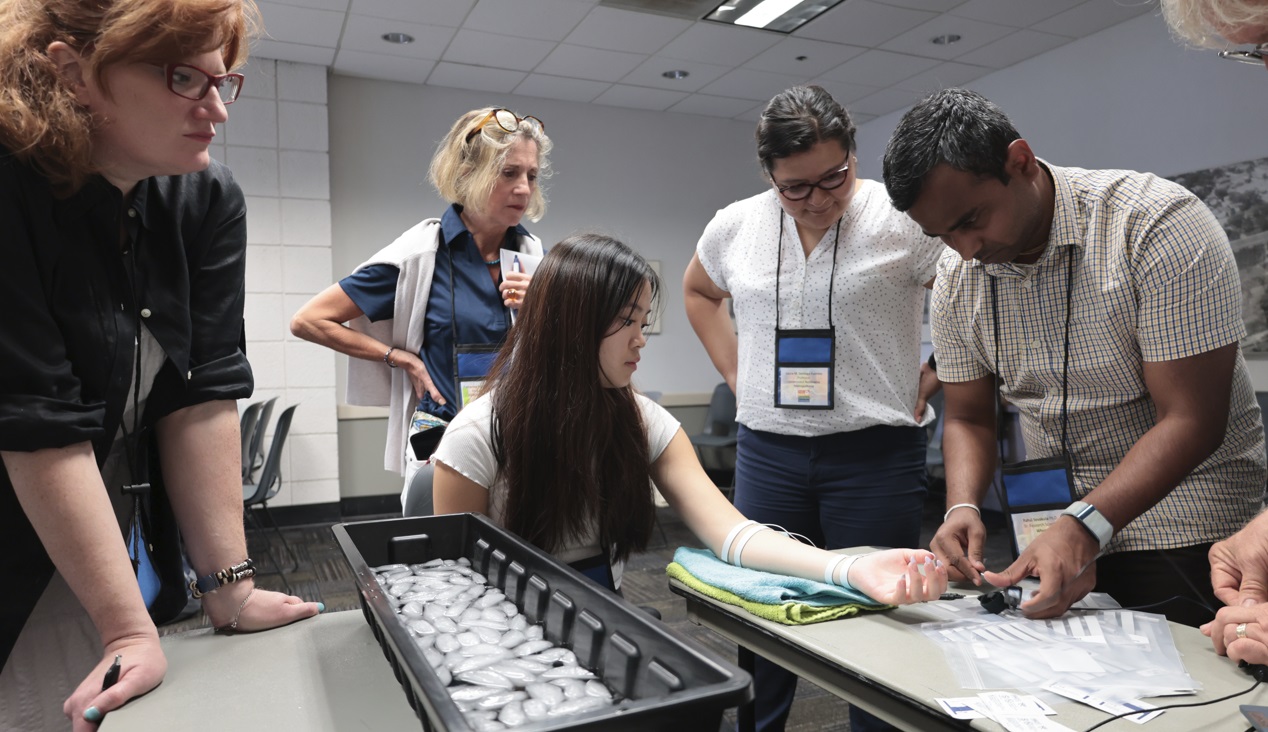
4T|Phys 2023 was the third installment in BIOPAC’s highly successful series of biennial industry conferences that began in 2017. After a two-year hiatus during the global Covid-19 pandemic, 4T came roaring back this summer with more workshops, more tracks, more sponsors, more presenters, and more countries represented than ever before. Over the course of three days, nearly 100 attendees participated in hands-on sessions with some of the top minds in physiology research, experiencing the latest tools for gathering and analyzing data.

BIOPAC’s in-house experts were joined by an array of authorities from the fields of physiology, psychology, imaging (fNIRS and fMRI), neuroscience, cardiovascular research, eye tracking, virtual reality (VR), biology, and engineering. Participants took part in workshop schedules drawn from five separate tracks that included fundamentals, which focused on the basics of data acquisition and analysis. The research track took attendees on a deeper dive into techniques and technologies, including recording evoked potentials, screen-based eye tracking, impedance cardiography using trans-radial bioimpedance velocimetry (TREV), stimulus presentation, exercise physiology, and many others. Participants were also able to tour UC Santa Barbara’s state-of-the-art Brain Imaging Lab to see up close how BIOPAC products are being used in both functional MRI (fMRI) and TREV studies.

“It was an incredible experience that left a lasting impact on me by helping me to understand more about physiological data collection and analysis,” said Dr. Parth Trivedi, a 4T|Phys attendee. “The choice of presenters and the topics covered were truly inspiring, offering valuable knowledge and fresh perspectives that enriched my understanding.”

4T|Phys 2023 Attendee MapThis year’s conference featured several new tracks such as a dedicated VR track led by partner company WorldViz. The WorldViz team showcased virtual reality solutions in a series of workshops that introduced how VR is being integrated in physiology and psychology research, explained how to create effective and immersive VR experiments, and demonstrated their latest PRISM technology for creating fully immersive projected 3D virtual environments.

Several other partner companies introduced their technologies and products both in the 4T exhibition hall and in workshop sessions. Argus Science presented their ETVision eye-tracking glasses that synch seamlessly with AcqKnowledge. Cognixion demonstrated the Cognixion One Axon-R—Research Edition wearable BCI-AR computing platform, which is being used to help individuals with neurodegenerative conditions and severe motor impairments communicate and interact with their environments assisted by augmented reality. Seenel Imaging showed off their MedelOpt Systems for whole-head EEG with fNIRS, including new VR integration. Participants also got a chance to try on the Research Ring by Senstream, a new user-friendly wearable research ring, which allows easy recording of EDA, PPG, Temperature, and ECG signals. CNSystems showed off the company’s NIBP continuous noninvasive blood pressure (NIBP) and hemodynamics devices.

If you missed the educational and networking opportunities at 4T|Phys 2023, don’t despair. We will be back again in a few years, bigger and better than ever. Watch this space for updates on our next installment. In the meantime, see our Video Tutorials and Webinars On Demand for trainings and seminars on our products and partners.


Make sure you never miss a BIOPAC event and keep up with the latest Tools, Trends, Techniques, and Technologies by contacting your local BIOPAC sales representative.

Effort Rewarded: Tools for Measuring Motivation

A job well done may be its own reward, but the mechanisms that drive humans to produce better results are far more complex. Much research has been devoted to the study of motivation and the psychophysiological processes that drive our behavior in pursuit of a goal, whether in relationships, on the job, or in education.

The nature of motivation is controversial, and a variety of competing theories have been put forward regarding what a motivational state comprises. Some researchers have argued that motivation is driven by specific human needs, like food, safety, or respect from one’s peers. Motivation may be categorized as intrinsic, meaning an individual pursues an activity because the activity itself is enjoyable or interesting, or extrinsic, which is when the pursuit offers some external reward.

Research into motivation has drawn interest across a wide range of fields, particularly in the areas of business and education. In the realm of business, corporations are especially focused on the motivation to work, which impacts productivity. In an era where buzzwords such as “quiet quitting” and “bare minimum Mondays” have entered the lexicon, companies are keen to know what motivates workers. Similarly, educators are looking to what types of intrinsic and extrinsic motivational factors are most effective in helping students achieve their learning goals. A key metric for measuring motivation is effort, which can be measured with a range of tools readily available to researchers.

work harderA 2020 Harvard University study published by the American Psychological Association investigated the differences in how adolescents and adults translated motivation into action based on the physical effort exerted for financial reward. Participants age 12 to 23 exerted force by squeezing a BIOPAC hand dynamometer in response to visual cues indicating monetary rewards from $.05 to $.75. The dynamometer, connected to a DA100C amplifier, measured grip force, which the participant saw displayed on a screen as a vertical bar. These tools provided the research team with a means of accurately demonstrating quantitative variations in motivational behavior across various age groups in pursuit of effort-based rewards.

A similar approach was used in a 2019 study from the Netherlands that examined eating behavior by “quantifying the dynamic aspects of appetitive motivation.” As with the above example, researchers relied on a BIOPAC device to measure grip effort, in this case, a bulb transducer connected to an MP36 data acquisition system running Biopac Student Lab software. By squeezing the bulb, participants were able to self-administer sips of chocolate milk via a tube in response to stimuli while experiencing various states of hunger and satiation. The process developed for this study, termed the “Grab-to-Eat Task”, or GET, successfully showed that handgrip effort provided an accurate metric for “evaluating motivational aspects of food consumption” with implications for further research into eating behavior and weight control.

Techniques for measuring motivation are not limited to grip effort. A 2019 study published by the National Institute of Health relied on cardiovascular signals to measure the willingness of older adults to engage in cognitively demanding tasks. Blood pressure and heart rate data were collected using a CNAP monitor connected to a BIOPAC MP150 system, which provided a detailed measure of effort exerted through the participants’ physiological response to each task.

These examples just begin to touch on the ways various psychophysiological measures are being applied to the study of motivation and effort. For additional insight, view the BIOPAC webinar on tools for measuring effort and motivation in the lab.


For more information on how to gather and integrate effort-related data into your motivation study, contact your regional BIOPAC sales representative.

Mind and Body: Signals to Enhance Your Psychophysiology Research

The human body and mind share an intrinsic link, both influencing and reflecting the health and general well-being of the other. Within the field of psychophysiology, researchers gain a wealth of insight into mental processes and disorders by studying physiological signals recorded from both the brain and body. Signals such as electrodermal activity (EDA), skin temperature (SKT), electroencephalogram (EEG), heart rate variability (HRV), and functional near-infrared spectroscopy (fNIRS) provide just a few of the tools helping us to better understand these mind-body interactions.

A wide range of research technologies has made these signals increasingly accessible in the lab as well as in everyday environments, allowing studies to place participants in increasingly naturalistic settings while gathering critical physiological data. In this way, researchers can provide a more accurate picture of how study participants react to stress and arousal, experience emotion, or interact within group environments.

One recent study used EDA and heart rate (HR) to examine the role of emotion in student success within computer-based learning environments (CBLE). As discussed in previous posts, a range of signals can be used to measure the body’s physiological response to emotion, otherwise known as “affect.” By gaining a better understanding of learners’ emotional responses to CBLE stimuli, researchers in this study hope to apply their data to improvements in CBLE design. EDA data was gathered from participants via SS57LA EDA leads while HR signals were collected with SS2LB shielded lead sets, both of which were connected to a BSL MP36 data acquisition and analysis system. Participants were shown imagery designed to evoke a negative emotional reaction before being asked to read a complex academic paper. The study was able to establish a link between the participants’ emotions and their comprehension of the reading material.

head with brain exposedIn another study, researchers used EDA and skin conductance response (SCR) to measure participants’ reactions to conditioned stimuli (CS) and unconditioned stimuli (US). The goal was to determine if fear-inducing memories could be modified either pharmacologically or through behavior modification to overcome fear. An MP36R System with AcqKnowledge software allowed analysis of SCR signals gathered via SS3LA finger transducers across a range of experiments designed to trigger fear-inducing memories. While the overall results were inconclusive, the SCR signals provided valuable feedback regarding the participants’ response to stimuli.

While EDA is a common thread through many of these psychophysiology studies, other signals provide researchers with a more complete and nuanced data set from which to draw their conclusions. Researchers exploring the factors influencing musical preferences combined EDA data with ECG and facial electromyography (fEMG) signals to assess how listeners reacted to familiar and unfamiliar musical stimuli. Data from all three signals were fed to an MP36 data acquisition and analysis system. The study found a strong correlation between musical preferences and familiarity with material as reflected by the subjects’ emotional responses.

These examples only scratch the surface of how psychophysiological research is being aided by an array of signals, all made accessible with available technology. To learn more about how to implement these signals in your next study, see BIOPAC’s Psychophysiology Applications webpage.


Contact your BIOPAC sales representative to learn more about the wide range of data-gathering tools available to help you construct your next psychophysiology study.

Human Factors: Physiological Signals Enhance Ergonomics Research

Ergonomics plays a role in almost every aspect of human interaction with the world around us—how we work, entertain ourselves, rest, and relax. Simply put, ergonomics (sometimes termed “human factors and ergonomics” or simply “human factors”) refers to the way in which physiological and psychological principles are applied to design, particularly in ways that benefit a user’s physical and psychological well-being and productivity.

In practice, ergonomics addresses more than our physical interactions but also encompasses our mental, emotional, and interpersonal states. What unites these different applications of ergonomic theory is that they can be studied and better understood with many of the same tools and signals applied in other areas of physiological and psychophysiological research. These can include ECG, EOG, fNIRS, EEG, and EMG, to name just a few.

Ergonomics can be broken down into three primary domains. Physical ergonomics relates to how the body interacts with the physical environment, from the design of tools we use every day to the physical environments in which we live and work. Cognitive ergonomics focuses on how our mental abilities are influenced by the systems and tasks with which we are presented. Organizational ergonomics (also known as macroergonomics) explores how to optimize organizational structures, policies, and processes within various social settings, including work environments.

Eye TrackingOne example of how physiological signals are being applied in physical ergonomics research involves the application of electrooculogram (EOG) signals to analyze eye movements, particularly saccades, as a measurement of eye fatigue caused by exposure to digital screens. The ubiquity of such screens in both our work and recreational environments makes such research critical to maintaining user well-being and productivity. This 2018 study utilized EOG electrodes connected via SS2LB leads to an MP36 data acquisition unit running BSL software to record and analyze EOG signals. Researchers were able to determine the optimal reading and viewing distance to minimize eye fatigue and discomfort, improving user health and productivity.

Cognitive ergonomics come into play when discussing the ease-of-use for a product. This is particularly important when dealing with how less technologically savvy groups interact with new technology, a challenge is explored in a 2019 study into how to develop a home heart monitor that would be easy for older users to operate. The study compared user interaction with device hardware, a mobile app, and a cloud-based software platform while using a BIOPAC research-level system as a control. Researchers created the signal baseline with an ECG amplifier connected to a data acquisition and analysis unit, comparing these results to the quality of the signal the user was able to obtain using the self-administered home devices and applications. This approach accurately assesses both the user-friendliness and quality of data obtained by several telemedicine systems.

These examples offer just a small sample of the ways in which physiological signals are being applied in the study of ergonomics. For an in-depth exploration of the topic, watch our webinar series on Ergonomics and Fatigue.


To learn more about using BIOPAC hardware and software to enhance your ergonomics study or design research, contact your local sales representative.

Workflow: Research Smarter with Automated Routines

You have probably heard the saying “why work harder when you can work smarter?” While this may seem like a cliché, there is no denying that smart work, or what might be more accurately termed “efficient effort,” not only alleviates worker stress but in doing so minimizes human error while creating opportunities for increased productivity and creativity.

In an earlier post on lab automation, we discussed how increased workloads and human error have contributed to a crisis of reproducibility and repeatability in the research community. To summarize, repeatability and reproducibility provide the foundation upon which the scientific method is built. The results of academic research only retain value for the wider scientific community when the conditions that produce such results can be repeated and shared amongst other researchers.

There are several best practices that can contribute to ensuring repeatability and reproducibility of research by maintaining the conditions under which lab work is conducted. These include, among other factors, consistency in the location or research environments, the tools used for measurement as well as other equipment used in experiments, and the routines and processes used to gather and analyze data.

As discussed in the previous blog post, automation of data gathering and analysis has been one of the best ways to ensure consistency and repeatability while helping to eliminate human error, as outlined in a 2019 article on improving reproducibility in synthetic biology through automation:

“The successful implementation of automation technology can help to improve both the throughput and reproducibility of experiments, although the high cost and lack of flexibility of traditional lab automation has so far hindered their wide-spread adoption in academia. Recently though, there have been advances in automation technology that, when combined with new protocol sharing methods and protocol management systems, may allow for researchers to gain the benefits of automation.”

—Jessop-Fabre and Sonnenschein

Before when discussing how to automate routines for data acquisition and analysis, the focus has been on the use of scripts to string together processes. While this achieves the goal of creating laboratory conditions that are more readily repeatable, scripting requires a specific skill set. This brings us back to the notion of working smarter, not harder.Plan Smart

Previous versions of BIOPAC’s own AcqKnowledge data gathering and analysis software offered a powerful Scripting tool as an add-on licensed feature. The latest version of AcqKnowledge supports a new licensed feature with Scripting called Workflow. Workflow takes all the functionality of scripts and places it in an easy-to-use, drag-and-drop interface that requires no prior scripting knowledge.

Workflow is the embodiment of the “work smarter, not harder” philosophy, allowing users to create automated routines to process and analyze data under consistent and repeatable conditions. By speeding signal conditioning and preparation for analysis, Workflow boosts efficiency. The ability to save and share workflows makes it easier for colleagues and reviewers to replicate research conditions. BIOPAC CEO, Frazer Findlay hosted a recent webinar in which he provided a detailed introduction to creating automated routines with Workflow.


For additional information on the latest version of BIOPAC’s AcqKnowledge software as well as other research tools and how they can help streamline your lab work, contact your local sales representative.

error: Content is protected !!