Back to School: Studying the New Frontiers in Digital Learning

As students return to the classroom and the academic year kicks off, it’s worth acknowledging that the campus is not just a setting for learning. The classroom and the academic processes within it are ripe for study. The application of physiological and psychological signals in education research has become increasingly vital to understanding academic performance and optimizing teaching methods.

With the proliferation of online teaching, particularly during the COVID-19 pandemic, researchers have gained unprecedented access to diverse digital learning environments. By analyzing data like eye-tracking, heart rate, and brain activity, alongside cognitive and emotional responses, educators and scientists can better assess the effectiveness of these tools, offering insights that could revolutionize how we approach learning in the digital age.

A study by researchers in Montreal, Canada examined the impact various video formats had on student engagement and performance during online learning sessions. The research team employed a combination of electrodermal activity (EDA) and facial movement to measure cognitive response to video stimuli. Two groups of study participants were each shown different formats of online learning courses. The first group watched an infographic-based video comprising animated graphics, images, and text. The second viewed a video capture of a professor lecturing in a classroom setting. Cognitive and emotional engagement data were gathered from both groups via BIOPAC wireless EDA amplifiers connected to a BIOPAC data acquisition and analysis system. Further measurement of emotional engagement was conducted using a facial recognition system with facial emotion analysis software. Results of the study showed that while the recorded lecture provided greater emotional engagement over a shorter period, the infographic video results showed a higher level of emotional and cognitive engagement over longer periods resulting in heightened levels of student performance overall.

Increased reliance on computer-focused teaching methods has sparked interest in the psychological and physiological impacts of this approach. A study by a pair of researchers at the Technical University of Munich looked at the physical and emotional responses students experienced in computer-based learning environments (CBLE) to determine if these metrics provided insight into academic performance. The research team gathered a combination of EDA, heart rate (HR), and self-reported data from 32 participants in a CBLE lab. EDA was gathered using a BIOPAC lead set connected to an MP36 data acquisition system running Biopac Student Lab software. Raw electrocardiogram (ECG) data was also collected via the MP36, while heart rate variability (HRV) was calculated using third-party analysis software. Researchers compared physiological data to participant responses. Negative academic affective responses to CBLEs were reflected in increased EDA and HR levels. EDA also showed a positive correlation with learning performance, while increased student boredom was reflected in decreased heart rate. Researchers concluded that EDA could be used as an accurate predictor of academic success in CBLEs.
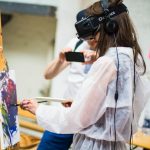
virtual classroomWhile the addition of virtual learning environments has created new opportunities in digital education, it has also drawn considerable interest as well as sparked some debate among educators regarding their effectiveness and impact on students. Researchers from the University of California, Santa Barbara and the University of Wisconsin published the results of a collaborative study into how immersive virtual reality (IVR) systems are being used in education and their effect on both cognitive and affective processing. Study participants were divided into two student groups. One viewed a biology lesson on the human bloodstream as an interactive animated journey in IVR while the other viewed a slideshow on a desktop monitor. EEG and ECG data were gathered using a B-Alert wireless EEG system while PPG and EDA signals were collected via a BioNomadix Wireless Amplifier. All data was fed into an MP160 data acquisition system running AcqKnowledge. The study concluded that students using the IVR environments not only performed at lower levels than their counterparts using non-IVR methods, but data also suggested higher levels of distraction and reduced engagement in the IVR group based on EEG measures than those who viewed the slideshow. According to the published study, “results support the notion that immersive environments create high affective and cognitive distraction, which leads to poorer learning outcomes than desktop environments.”

The frontier of digital learning is just beginning to be explored. BIOPAC has the tools for gathering a wide range of physiological and psychological data on digital and virtual learning environments. For additional information on integrating digital solutions into your study, see our Webinars page.


Are you planning an education study using physiological signals and data, VR, facial recognition, or eye tracking? Our regional sales staff is ready to help you find the right tools for the job.


Remote Learning and Ventilator Testing: Our COVID-19 Response in 2020

A common thread uniting the world community is near-universal agreement that 2020 has been the most challenging year in decades. From young to old, life as we know it has been upended. Virtually everything we have come to take for granted, from employment, to education, socializing with friends, or buying toilet paper has been put on pause as we grapple with an implacable enemy that recognizes no political or demographic boundaries. We have had to quickly adapt and adopt common sense mitigation strategies until we prevail in the nearly year-long battle against COVID-19. And with a vaccine imminent, we are collectively answering that challenge.

When the first stay-at-home orders hit California in March of this year, BIOPAC Systems, along with hundreds of other offices in the Santa Barbara area, shut down to protect our employees. As small businesses made masks, and automakers retooled assembly lines to produce ventilators, we assessed how to best use our own resources in this pandemic.

We brought together our senior team of engineers and applied existing BIOPAC technologies for one early tool that has been instrumental in saving lives.The Ventilator Ventilation System can be used in ventilator prototyping, large-scale production testing for new ventilator manufacturing, and field testing for existing ventilators. Critical pressure and airflow measurements are tracked through the system. Test automation and workflow management is available through scripting. Technician instructions, procedures and prompts ensure the correct procedure is performed and a pass/fail audit trail is documented.

The BIOPAC Ventilator Validation Kit was used at Ford Motor Company, Virgin Orbital, NASA/STARK Industries and with others to increase their ventilator production capacity and, in Ford’s case, meet their goal of producing 50,000 ventilators for U.S. Hospitals.

As educators also struggled with changes to their classrooms with nearly all U.S. universities going to virtual learning or hybrid classroom environments, we sought to safely preserve some of the in-person learning experience.

In June, the Biopac Student Lab Practical Lab Learning Kit was released, or BSL Home. This single-channel data acquisition system preserved the lab experience even for students learning physiology from their homes; Lessons on EMG, ECG, EEG, EOG, respiration, biofeedback, and aerobic exercise are pre-configured and included with a handheld device that includes integrated hardware and software.

BIOPAC offers a wide array of wired and wireless equipment that can be used in your research. To find more information on the Ventilator Validation Kit or the BSL Home Practical Lab Kit, please visit the BIOPAC website.

Photo by Long Truong on Unsplash

Libraries in 2020: From Curbside Pickup to Practical Lab Kits

Libraries can support remote students with distance learning tools like BSL Home practical lab kits, accessible wifi or hotspot loaners, and more.

By: Jasmine Anderson, Biopac Student Lab Product Manager

People call the library the heart of the university campus, which speaks for the memories students and alumni associate with it. It’s the essential college stomping ground and uniquely serves as both a quiet refuge for studying and a meeting place for free-flowing ideas. At the library, peers mingle, study groups collaborate, and you can find solace from the stress of student life between the book stacks. Well, at least that was true before COVID-19…

Now facing the pandemic, libraries are performing their own open-heart surgery to maintain the flow of shared knowledge and support a thriving academic experience. They are redesigning ways to safely provide information and tools to students, facilitating inter-disciplinary course reserves and collaboration, and helping to maximize resource funding and logistics across campus.

“Quiet, please” doesn’t apply these days…talk to your librarian to discover new funding options!

To maintain their role in the college experience while also evolving with the recent changes to academia, libraries are adopting electronic print collections, virtual technology, and self-service stations. Adding these services—along with the infrastructure for self-checkout, curbside pickup, and the ability to loan technology such as laptops, anatomical models, and lab kits—helps support the transition to distance learning at universities.

Libraries can also help students in the sciences by providing funding for portable lab kits to fill the gap left by practical lab closures. In the fall, students can reserve BSL Home kits on loan from the library to participate in hands-on physiology experiments from anywhere. With BSL Home, students record and analyze data from their own bodies and receive the same authentic, open-ended, and complex learning framework that’s true of the traditional lab.

To champion this, the Association of College & Research Libraries (ACRL) put forth guidelines for instruction programs stating that libraries should demonstrate a “commitment to purchasing and providing support for classroom technologies.” Alongside the University of Wisconsin, several other institutions are following suit by providing resources and funding to support classroom technologies. A handful of these universities are listed below with their library action plan (Table 1).

Institution/University Library Action Plan
Auburn University Auburn’s subject librarians offer services to help faculty by purchasing books, journals, and electronic resources as well as supporting teaching and research in specific disciplines.
Case Western University Case Western’s Library equipment borrowing program takes suggestions for what they should be carrying online.
Georgia Southern University Georgia Southern provides a materials request form that faculty can complete online to request the purchase of teaching and research materials.
Michigan State University Michigan State allows instructors to request item purchases to place them on course reserve, similar to the University of Wisconsin MERIT Library.
University of California, Santa Barbara UCSB allows similar reserve requests by directing faculty to make requests to their subject librarians.
University of California, Los Angeles UCLA utilizes CCLE (Common Collaboration and Learning Environment), a campus-wide service that makes collaboration possible across schools, divisions, and departments and helps to advance remote teaching, learning and research.
University of Nevada, Las Vegas UNLV takes faculty purchase recommendations through a form on their website which can specifically be recommended to their healthcare library.

Table 1 – A list of Institution/University Libraries paired with their action plan to support classroom technologies.

Even though libraries will not operate in their normal manner this fall, they still remain at the heart of campus life, working to support the student body in stimulating and innovative ways. The students of 2020 won’t have the same memories in the library as classes before them, but with new technology available online and kits to take home, it’s encouraging to see the library continue to be a place of shared knowledge and scholarship. For more information on how your school can accommodate practical labs with BSL Home, talk to your librarian and reach us at info@biopac.com.

error: Content is protected !!