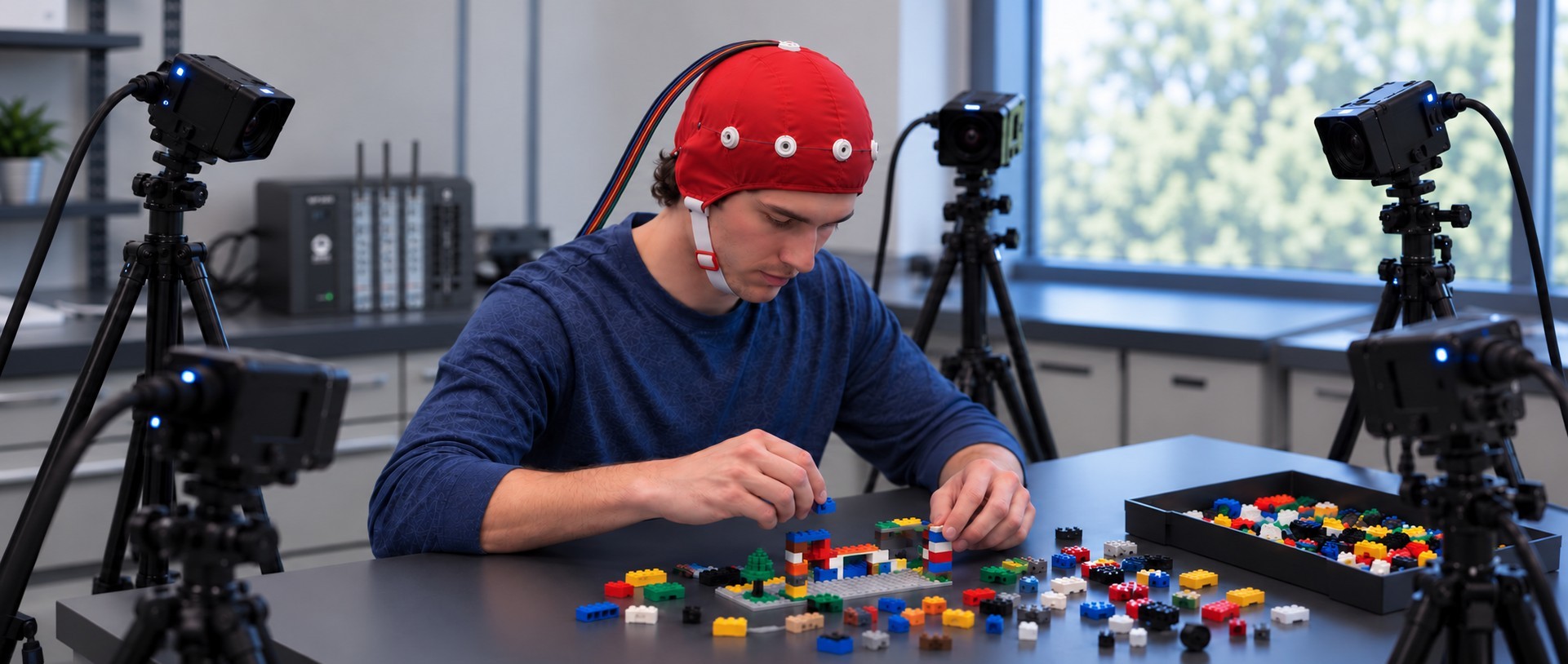
Capturing More Than Physiology: Multi-Camera and Multimodal Research

In the early 20th century, Cubist painters like Pablo Picasso and Georges Braque argued that traditional linear perspective on a subject was an illusion. Something was always hidden from the viewer, distorted, or lost altogether. Just as a Cubist painter might fracture their subject to reveal its true shape, a physiology lab uses multiple synchronized camera angles to bypass a single lens’ limitations.

The same principle applies to modern physiological and psychophysiological research. Physiological signals such as electrocardiogram (ECG), electroencephalogram (EEG), electrodermal activity (EDA), respiration, and blood flow provide valuable insight into how the body responds to stimuli, environments, and social interactions. Yet physiological data alone often leaves important questions unanswered. What was the participant doing? What was happening in the environment? Did social interaction, movement, or behavioral events coincide with a change in the recorded signal?

To answer these questions, many studies now combine physiological recordings with multiple video streams, eye tracking, audio, environmental monitoring, and other forms of media capture. This multimodal approach lets investigators examine physiological measurements alongside the events occurring around them, revealing a richer, more complete picture of human and animal behavior. As these data streams multiply, so does the need to capture, synchronize, and review them together.

Researchers at Macquarie University in Australia and collaborating institutions recently described a multimodal laboratory designed to study face-to-face communication and social interaction. The platform centered on a BIOPAC data acquisition system, amplifiers, and amplifier input module that acquired ECG, EDA, photoplethysmography (PPG), respiration, and skin temperature. The researchers combined physiological measurements with a Tobii eye tracker, wearable sensors, audio recording, motion analysis systems, and six video cameras positioned throughout the laboratory. The project showed that adding more recording sources often complicates data collection coordination, and that integrating multiple acquisition systems requires careful synchronization and workflow design. The camera system played a particularly important role. They used multiple viewing angles for behavioral coding, gesture analysis, participant observation, and synchronization verification. Rather than serving only as a record of the experiment, the video data became an important part of the analysis itself. For researchers studying communication, teamwork, education, or human-computer interaction, the work illustrates how behavioral observations can enhance interpretation of physiological measurements.

A team from the Swedish University of Agricultural Sciences (SLU) explored similar ideas outside the traditional laboratory by developing the SLU Multisensory Outdoor Laboratory (SENSOLA). The researchers used BIOPAC data acquisition and analysis systems with AcqKnowledge software and BioNomadix wireless devices to collect respiration and PPG measurements as participants moved through natural and built environments. Their platform combined those recordings with eye tracking, stimulation, video, audio, GPS data, participant feedback, and environmental measurements. One key observation was that physiological measurements become much more insightful when paired with information about a participant’s surroundings and experiences. Video proved especially valuable because it documented environmental conditions, participant behavior, and unexpected events that might otherwise be difficult to identify during later analysis. As physiological research moves beyond controlled laboratory settings, projects such as SENSOLA demonstrate the value of capturing physiological and observational data together.
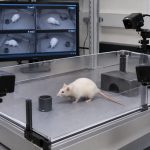
ratPreclinical research is increasingly applying the same principles. In a recent toxicology study from Japan, investigators developed the ToxQb platform around a BIOPAC data acquisition system and AcqKnowledge software with NDT to collect EEG and ECG data from laboratory rats. The physiological measurements were integrated with overhead, front, and side-view cameras, along with thermal imaging systems. The goal was to monitor behavioral and physiological changes simultaneously over extended periods. By reviewing camera footage alongside EEG and ECG recordings, researchers could relate changes in movement, posture, and activity to physiological events. The authors concluded that combining these diverse data streams provided deeper insight than any single measurement could. The study demonstrates that multimodal acquisition extends beyond human research, across a wide range of life-science applications.

Although these studies span communication research, environmental psychology, and toxicology, they point to a common trend: researchers are capturing much more than physiology. Like the artists who challenged the limitations of a single viewpoint, today’s researchers increasingly rely on multiple synchronized perspectives to reveal a more complete picture of physiology, behavior, and environment. Multiple cameras, video recordings, eye tracking, environmental sensors, and behavioral observations can provide valuable context for interpreting physiological measurements. Learn how using BIOPAC’s MultiCapture feature in AcqKnowledge 6 to integrates multi-camera video and other media into research via our webinar on the topic.


Are you planning to integrate multiple camera perspectives in your next study? Our sales team can help find the right equipment and show you how to leverage AcqKnowledge‘s MultiCapture feature to achieve the best possible results.

Snooze Studies: Tools for Sleep Research

Comedic actress Mindy Kaling may have been speaking for everyone enamored with slumber when she wrote, “There is no sunrise so beautiful that it is worth waking me up to see it.”

Who hasn’t at one time preferred the restorative effects of a few extra hours of sleep to the harsh realities of the waking world? For both humans and other animals, sleep is indelibly linked to physical, mental, and emotional well-being.

In experimental biology, understanding sleep patterns and disruptions in both humans and animals provides essential insights into health, behavior, and neurological conditions. Techniques such as pulse oximetry, electroencephalography (EEG), and electromyography (EMG) provide critical data for unlocking the mysteries of sleep’s influence on human and animal biology.

Pulse oximetry is a noninvasive method that measures the oxygen saturation level of the blood, an indicator of respiratory efficiency during sleep. It is typically expressed as peripheral blood oxygen saturation or SpO2. This tool is especially useful in detecting sleep apnea and other breathing-related sleep disorders. EEG records electrical activity in the brain, offering a window into the different stages of sleep (from light sleep to deep sleep and rapid eye movement [REM] phases). It helps researchers understand how and why sleep patterns may be altered by various neurological diseases or conditions. EMG measures muscle activity and is crucial in examining the quality of sleep, particularly by identifying periods of muscle atonia during REM sleep, which can be disrupted in disorders like REM sleep behavior disorder.

BIOPAC and partner company Kissei offer SleepSign™ software, which provides essential tools and technologies that enhance the effectiveness of sleep studies. BIOPAC’s advanced multimodal setups can integrate data from EEG, EMG, pulse oximetry, and other sources for human participants and animals into a single coherent analysis platform. This integration allows for simultaneous recording and analysis of physiological and neurological signals during sleep.

boyA study published in the Sleep Research Society’s journal, Sleep, evaluated the effect of sleep on upper airway dynamics in obese children with obstructive sleep apnea syndrome (OSAS). Researchers used data gathered via a BIOPAC differential pressure transducer and flow transducer and fed into a data acquisition and analysis system to measure SpO2 and nasal-oral mask airflow of participants during MRI scans. The study results provided “further insight into the biomechanical basis of OSAS and assist in more effective management.”

SleepSign™ software plays a crucial role in automating the analysis of sleep data. It processes large volumes of EEG and EMG data, providing researchers with user-friendly interfaces and detailed reports that highlight anomalies and patterns in sleep stages. A study published in the 2023 issue of Neurobiology of Sleep and Circadian Rhythms investigated the long-lasting effects of sleep disruption on young prairie voles using a combination of BIOPAC’s AcqKnowledge software and SleepSign™ to acquire and analyze EEG and EMG data. The study concluded that early-life sleep disruption in postnatal voles has significant impacts on REM sleep patterns later in life.

These are just some of the technologies allowing researchers to dissect the nuances of sleep in both human health and animal models while also paving the way for novel therapeutic strategies to address sleep-related disorders. For additional information check our webinars on wireless animal EEG recordings and wireless logging.


Are you planning to explore the realm of sleep with your next study? Reach out to our experts for assistance selecting the best tools for gathering and analyzing sleep data.

Workflow: Research Smarter with Automated Routines

You have probably heard the saying “why work harder when you can work smarter?” While this may seem like a cliché, there is no denying that smart work, or what might be more accurately termed “efficient effort,” not only alleviates worker stress but in doing so minimizes human error while creating opportunities for increased productivity and creativity.

In an earlier post on lab automation, we discussed how increased workloads and human error have contributed to a crisis of reproducibility and repeatability in the research community. To summarize, repeatability and reproducibility provide the foundation upon which the scientific method is built. The results of academic research only retain value for the wider scientific community when the conditions that produce such results can be repeated and shared amongst other researchers.

There are several best practices that can contribute to ensuring repeatability and reproducibility of research by maintaining the conditions under which lab work is conducted. These include, among other factors, consistency in the location or research environments, the tools used for measurement as well as other equipment used in experiments, and the routines and processes used to gather and analyze data.

As discussed in the previous blog post, automation of data gathering and analysis has been one of the best ways to ensure consistency and repeatability while helping to eliminate human error, as outlined in a 2019 article on improving reproducibility in synthetic biology through automation:

“The successful implementation of automation technology can help to improve both the throughput and reproducibility of experiments, although the high cost and lack of flexibility of traditional lab automation has so far hindered their wide-spread adoption in academia. Recently though, there have been advances in automation technology that, when combined with new protocol sharing methods and protocol management systems, may allow for researchers to gain the benefits of automation.”

—Jessop-Fabre and Sonnenschein

Before when discussing how to automate routines for data acquisition and analysis, the focus has been on the use of scripts to string together processes. While this achieves the goal of creating laboratory conditions that are more readily repeatable, scripting requires a specific skill set. This brings us back to the notion of working smarter, not harder.Plan Smart

Previous versions of BIOPAC’s own AcqKnowledge data gathering and analysis software offered a powerful Scripting tool as an add-on licensed feature. The latest version of AcqKnowledge supports a new licensed feature with Scripting called Workflow. Workflow takes all the functionality of scripts and places it in an easy-to-use, drag-and-drop interface that requires no prior scripting knowledge.

Workflow is the embodiment of the “work smarter, not harder” philosophy, allowing users to create automated routines to process and analyze data under consistent and repeatable conditions. By speeding signal conditioning and preparation for analysis, Workflow boosts efficiency. The ability to save and share workflows makes it easier for colleagues and reviewers to replicate research conditions. BIOPAC CEO, Frazer Findlay hosted a recent webinar in which he provided a detailed introduction to creating automated routines with Workflow.


For additional information on the latest version of BIOPAC’s AcqKnowledge software as well as other research tools and how they can help streamline your lab work, contact your local sales representative.

Choosing the Right Signal: Easy as 1, 2, 3

In physiology and life sciences, researchers rely on a wide range of signals to gather data from humans and animals. These signals provide critical insight into how complex organisms function under a myriad of conditions. However, this wealth of potential data sources can also present a challenge for researchers: choosing the right signals on which to focus their data gathering. For those lacking a background in the disciplines and mechanisms behind these signals, sifting through the available methodology can be overwhelming. The best place to begin is by considering one or a combination of the “Big Three” physiological signals: ECG, EDA, and respiration.

In physiology and life sciences, researchers rely on a wide range of signals to gather data from humans and animals. These signals provide critical insight into how complex organisms function under a myriad of conditions. However, this wealth of potential data sources can also present a challenge for researchers: choosing the right signals on which to focus their data gathering. For those lacking a background in the disciplines and mechanisms behind these signals, sifting through the available methodology can be overwhelming. The best place to begin is by considering one or a combination of the “Big Three” physiological signals: ECG, EDA, and respiration.

One from the Heart

Changes in heart rate can provide information on both the physiological and psychological state of a research participant. Electrocardiography (ECG or EKG) is a biopotential measurement that provides direct metrics on electrical voltage changes in the heart. With the help of simple hardware and software, it is possible to record these voltage variations as waveforms to track how the heart responds to stimuli. Additional data can be provided by creating reoccurring reference points in the waveform, measuring the intervals between beats, and calculating heart rate variability to track changes over time or in response to stimuli.

Skin Deep

Electrodermal Activity (EDA) provides one of the best measurements of how the body responds to psychological stress and anxiety. It can be simply understood as a measure of changes in the electrical conductance of the skin in relation to the production of sweat. The physiological process of EDA comprises two components, skin conductance level (SCL) and skin conductance response (SCR). SCL is a tonic level that slowly changes over time, measuring the period for response to a stimulus to occur, from its onset to its peak. SCR reflects the phasic response to an arousing stimulus that is shown in faster changes of the skin conductance level. As an example of the application of EDA and ECG measurements in psycho-physiological research, a recent study applied both signals in measuring the cognitive states of gamers during human-computer interaction (HCI).

Breathe Easy

ArachnophobiaAs with changes in heart rate, variations in breathing cycle reveal how subjects respond to a wide range of stimuli and conditions. The signal produced by the respiratory cycle is a transduced physiological signal. As such we can apply mechanisms to create a voltage potential to measure phases of inhalation and exhalation in this cycle. This data can be represented in waveforms, providing data on respiratory rate, amplitude, and respiratory sinus arrhythmia (RSA). The latter combines respiratory data with ECG signal data to show changes in heart rate in response phases in the respiratory cycle. A 2020 machine learning study for the development of virtual reality applications combined respiration, EDA, and ECG signals to measure participant’s fear response to spiders, an example of how all three signals can be simultaneously utilized in psychophysiology research.

Choosing the right signal shouldn’t be the biggest hurdle to designing your next research project. Applying one or more of these “Big Three” can cover a wide range of data gathering goals.


For additional assistance, consult BIOPACS online resources on Life Science and Physiological Signals or contact your local BIOPAC representative.

Enhance Consistency with an Automated Lab Refresh

The global COVID-19 pandemic made in-person lab work impossible under many circumstances and difficult in the best of conditions. Now, as researchers and students begin to return to the lab, an opportunity presents itself for a fresh start. One way in which labs are refreshing their approach to research and education is by adding software and equipment that allows for the automation of procedures and analysis with the goal of increasing repeatability and reproducibility within experiments and research.

It’s been a challenging 18 months for science educators and those running research facilities. The global COVID-19 pandemic made in-person lab work impossible under many circumstances and difficult in the best of conditions. Now, as researchers and students begin to return to the lab, an opportunity presents itself for a fresh start. One way in which labs are refreshing their approach to research and education is by adding software and equipment that allows for the automation of procedures and analysis with the goal of increasing repeatability and reproducibility within experiments and research.

Crisis of reproducibility

The phrases “reproducibility crisis” and “replication crisis” became buzzwords in the scientific community in the 2010s, with that notoriety spilling over into both the scientific and mainstream media’s coverage of the sciences. Several high-profile scientific and sociological studies were called into question when researchers were unable to reproduce their results. In 2015, a group of psychology researchers under the moniker of the “Open Science Collaboration” found that they were only able to reproduce the findings of 68% of studies published in high-ranking peer-reviewed journals. A 2016 survey of 1,576 researchers by the journal Nature similarly found that 52% agreed that there was a “crisis” of reproducibility, though most said they still trusted published research.

The automated advantage

One step that researchers can take to ensure the reproducibility of their experiments and thereby boost the integrity of their data and conclusions is by automating procedures, workflow, and record keeping. These steps not only reduce the possibility for human error, but also provide a clear roadmap for future researchers to repeat processes in the lab to review and test results. The National Academies of Sciences, Engineering, and Medicine guide Reproducibility and Replicability in Science (National Academies Press, 2019) outlines several of the ways in which automation is being used to enhance reproducibility of research results, including record keeping, data analysis, data version control, and workflow management. The publication notes that “automated scientific workflows are essential in data-intensive and large-scale science missions that aim to be computationally reproducible.”

A 2019 study by researchers at the Indiana University School of Informatics, Computing, and Automated studyEngineering employed these techniques to demonstrate “how automation can be used to address many of these factors contributing to the replication crisis.” The study focused on the controlled rearing of chicks, comparing automated and non-automated research methods. The study found that the automated tracking system allowed researchers to increase the amount of data collected from each test subject, which in turn “reduced measurement error by 60% and increased the effective size of experiments by about 300%.”

An automated refresh

BIOPAC’s AcqKnowledge data acquisition and analysis software allows labs of any size to gain the advantage of automation to improve both the efficiency and effectiveness of research. Features like Batch Processing and  BIOPAC Basic Scripting help eliminate the potential for human error by consolidating multiple tasks into a single automated routine. A heightened level of standardization and consistency results in improved data quality. Adding a Basic Scripting license to AcqKnowledge 5.0.6 ensures results are reproducible regardless of who is carrying out the experiment.

Tips for implanting rodent pups with the Epoch wireless recording system

Implanting pups can be tricky, yet their value as neonatal models of human disease is key.

Tips for implanting rodent pups with the Epoch wireless recording system

The Epoch system enables recording 2 or 4 channels of EEG from neonatal rodents as young as postnatal day 10 (P10) in mice and P6 in rats using the 2-week transmitter. Implanting pups can be tricky—their skulls are very thin and the small size of the animals is difficult to work with. Yet, their value as neonatal models of human disease is key to developing new therapies or understanding neural dysfunction at such an early age.

Our experience has led to the following tips for maximizing the success of implanted pups:

  1. Allow pups time to recover. Although recordings can commence immediately, we recommend waiting 24 hours before commencing recordings to allow a fuller recovery.
  1. Limit recording time. Recording from rodent pups should be limited to about 2 h at a time, preferably in a temperature- and humidity-controlled incubator.
  1. Keep pre-weened pups in their dam’s presence as often as possible. Pups rely on the dam for complete care.
  1. Cull the litter to 4-6 pups. The dam may have issues with pups that are overly cold, not feeding often enough, or simply due to the presence of the transmitter.
  1. Implant all pups. It may be helpful to implant all pups in a litter either with Epoch transmitters or sham transmitters (sham transmitters are available, contact us).
  1. Use chew toys to prevent damage from the dam. Chew toys, such as nylabones, may help prevent the dam from chewing on the transmitters.
  1. Mind the state of the dam. Ultimately, the health and disposition of the dam may affect how she tolerates pups implanted with the Epoch transmitters.

Epoch, the smallest wireless EEG transmitter system available, is provided by BIOPAC to make quality EEG recordings from an early age possible. The Epoch transmitter is simply implanted to the skull of the animal with medical cyanoacrylate, requiring no bone screws. Surgery is quick and simple, requiring a small incision on the scalp, removal of the periosteum with 1% hydrogen peroxide, drilling small holes for the electrodes using a burr-type drill, implanting the transmitter, and re-absorbable sutures.

For more information on BIOPAC’s wide range of tools for recording, displaying, and analyzing EEG signals from human and animal subjects, including automated EEG analysis, seizure detection, evoked responses and many others, visit BIOPAC’s EEG Analysis page or view BIOPAC’s full line of electrodes, amplifiers, and wearable, wireless transmitters and loggers.

BIOPAC Systems, Inc. provides life science researchers and educators with data acquisition and analysis systems that inspire people and enable greater discovery about life. Visit us at www.biopac.com.

error: Content is protected !!

