Virtual Phobia: How VR is Transforming Anxiety and Fear Research

“Do the thing you fear and the death of fear is certain.”

These words by American poet and philosopher Ralph Waldo Emerson assert a head-on approach to overcoming life’s anxieties and phobias. It’s a strategy backed by the latest research methodology, which, thanks to technology, can leverage the relative safety of virtual environments to study how participants react to and manage anxiety.

Anxiety disorders are among the most prevalent mental health conditions and are often maintained through avoidance of fear‑provoking situations. A cornerstone of evidence‑based treatment is exposure therapy, in which individuals gradually and safely confront feared experiences to reduce anxiety over time. In recent decades, virtual reality (VR) has emerged as an effective way to deliver exposure therapy and to study anxiety under controlled conditions. Virtual reality exposure therapy (VRET) uses immersive, computer‑generated environments to recreate anxiety‑triggering situations, such as public speaking, social interaction, or medical procedures, while allowing researchers and clinicians to control intensity, pacing, and repetition.

Research shows that VRET can be as effective as traditional, real‑world exposure for many anxiety‑related conditions, including specific phobias, social anxiety, panic disorder, and symptoms of post‑traumatic stress disorder (PTSD). One of VR’s key advantages is its balance between realism and experimental control. Environments can be standardized across participants, exposure levels can be adjusted in small steps, and scenarios can be repeated across sessions without the logistical challenges of invivo exposure. At the same time, well‑designed VR experiences reliably evoke emotional and stress responses, making them valuable for both treatment and research.

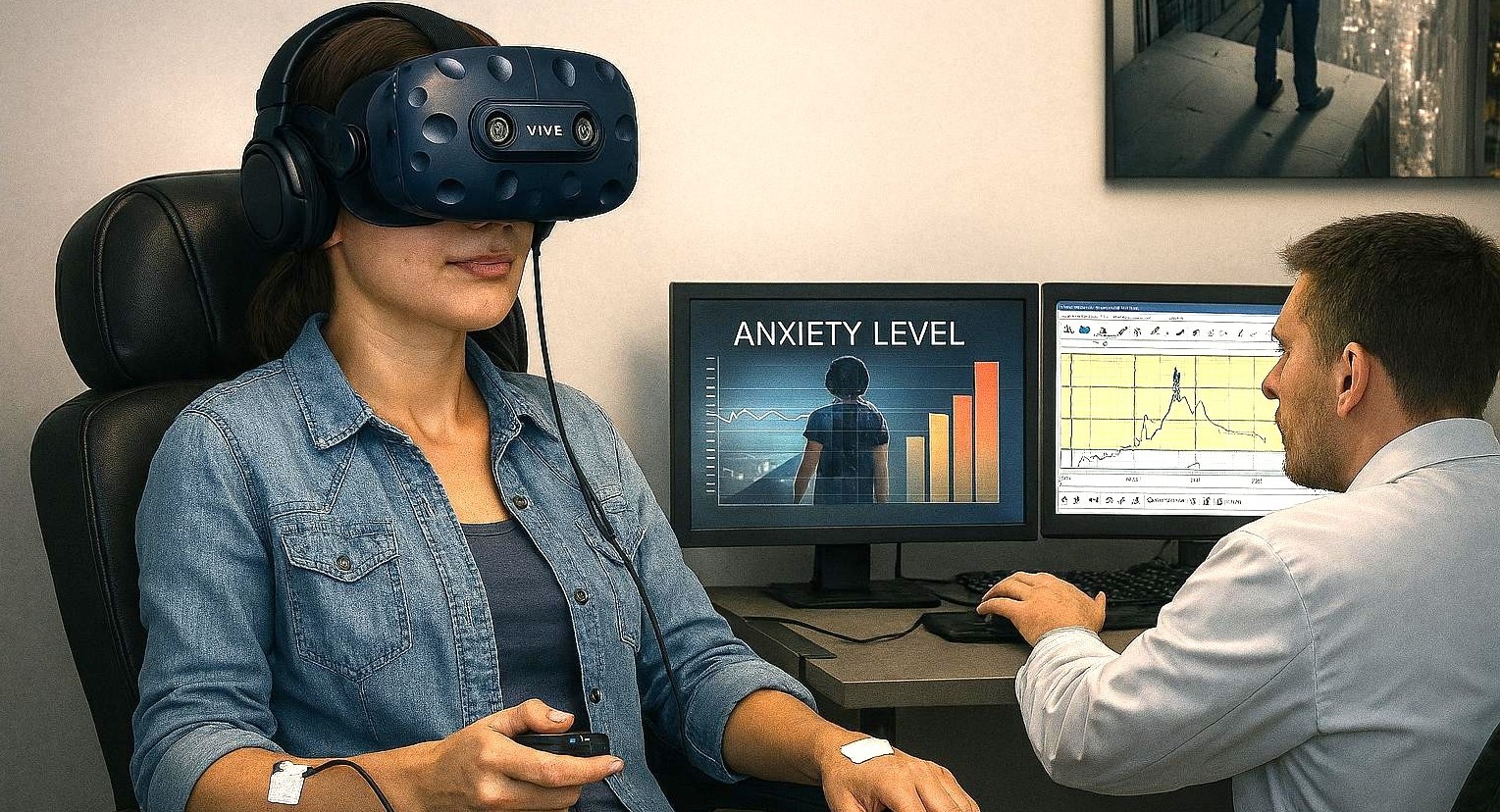
The scientific impact of VR is amplified when immersive environments are combined with multimodal psychophysiological measurements—such as electrocardiography (ECG), electroencephalography (EEG), functional near‑infrared spectroscopy (fNIRS), respiration, electrodermal activity (EDA), and eye tracking. In multimodal studies, researchers gain a deeper, objective understanding of how the brain and body respond to emotional challenges. By synchronizing VR events with physiological data, researchers can observe how the body responds moment by moment as fear is triggered, maintained, and eventually reduced.

Researchers at the University of Cyprus investigated whether a single session of VR exposure could meaningfully reduce public speaking anxiety in university students. Participants were placed in a virtual auditorium and asked to give a speech in front of realistic virtual audiences. The researchers could adjust audience size and behavior, allowing them to gradually increase the social challenge while maintaining full experimental control. To capture objective stress responses, heart activity was recorded using a Lead I electrocardiogram configuration, with two disposable silver/silver‑chloride electrodes placed on the forearms. Signals were amplified with a BIOPAC ECG100C bio‑amplifier, acquired using a MP data acquisition system with AcqKnowledge software for recording and analysis. This setup enabled precise measurement of heart rate and heart rate variability (HRV) throughout the task. The virtual environment was created using the Vizard Virtual Reality Toolkit, which was integrated with the BIOPAC system so that physiological data could be synchronized with key moments in the VR experience, such as the start of the speech. Results showed significant reductions in both self‑reported anxiety and physiological arousal following a single VR exposure session, demonstrating how VR and physiological monitoring can be combined to assess rapid emotional change.

Researchers at the University of Macau examined how social rewards and emotional cues influence anxiety during interpersonal interaction. Participants engaged in a virtual reality social interaction game designed to mimic real social exchanges while allowing researchers to control feedback and outcomes. During the task, heart activity was recorded using ECG with an MP data acquisition system. By synchronizing physiological data with events in the virtual environment, the research team could examine how anxiety‑related responses evolved as social interactions unfolded. The findings suggested that anxiety responses were more strongly related to sensitivity to others’ emotional cues than to reward outcomes themselves. This study highlights how immersive VR combined with synchronized physiological recording can provide insight into the subtle emotional dynamics of social anxiety, processes that are difficult to capture using self‑report measures alone.

dentalanxietyIn a multi‑institutional effort led by researchers at the University of Toledo, researchers developed a study protocol to better understand how dental fear develops and how early exposure might help prevent it. The study uses a virtual reality dental clinic to expose participants to dental‑related sights and sounds across multiple sessions and contexts. The virtual environment was programmed using Vizard software, and participants interacted with it using an HTC Vive Pro headset and handheld controllers, allowing natural movement and exploration. Skin conductance responses (SCR) were recorded using a BIOPAC MP system paired with a wireless BioNomadix EDA transmitter, enabling participants to move freely while skin conductance and other signals are collected. This wireless, immersive setup is especially well suited for fear‑learning research, where comfort and natural movement are critical. Although the publication focuses on study design rather than completed outcomes, it demonstrates how VR combined with physiological monitoring can support translational research aimed at understanding and preventing the development of fears and anxiety.

These studies show how VR and synchronized physiological measurement are expanding the study of anxiety, stress, and fear. VR provides immersive, repeatable experiences that reflect real‑world challenges, while physiological signals reveal how the body responds beneath conscious awareness. For additional information on how to integrate VR into multimodal research, visit our Webinar page for instructive trainings on this topic and others.


If you are planning to integrate VR into your next multimodal study, reach out to our skilled sales staff who can assist you through each step of the process.

Game On: Applying Physiological Data in Video Game Design and Research

Ever since players first started feeding quarters into arcade games and began plugging in home systems in the late twentieth century, researchers have looked for practical tools for both shaping video game design and measuring their effects on players. Physiological signals filled this niche area of research. Researchers began investigating the connection between physiological science and gaming in the 1980s and 1990s, when early studies explored the effects of video games on heart rate and arousal. These first studies focused on issues such as aggression and overstimulation, but research has since expanded to encompass the cognitive and emotional aspects of gameplay. An early research project by NASA, for example, examined how biofeedback could be applied to game design to enhance traditional game control methods while also improving players’ cognitive abilities.

Today, physiological monitoring is not only a method for psychological inquiry but also a vital asset in improving user experience (UX) research, game accessibility, and even driving therapeutic game development. As wearable sensors and game engines grow more sophisticated, the integration of physiological signals into game design is opening new frontiers for immersive, responsive, and health-conscious gaming. By analyzing real-time bodily signals, such as heart rate (HR), electroencephalography (EEG), electromyography (EMG), electrodermal activity (EDA), respiration, photoplethysmography (PPG), and electrooculography (EOG), researchers and developers can gain a deeper understanding of how players emotionally and physically respond to game elements.

A study published in the International Journal of Human-Computer Studies investigated whether players’ self-reported preferences for first-person shooter (FPS) game dynamics match their emotional reactions during both gameplay and viewing. Researchers recruited 24 active gamers and divided them into two groups: those who enjoyed the fast-paced action of FPS games and those who didn’t. While participants played an FPS game and later watched a recording of it, the team measured electrodermal activity (EDA), heart rate, and facial muscle responses, specifically expressions associated with frowning (corrugator supercilii) and smiling (zygomaticus major), to capture emotional arousal and valence. Physiological signal data were recorded using BIOPAC EDA, PPG, and EMG amplifiers, which were connected to a data acquisition and analysis system running AcqKnowledge software. Although both groups reported more positive feelings and higher excitement after actively playing rather than watching, the data revealed a deeper story: players who disliked the game showed more substantial rises in arousal during play. Those who favored the dynamics, however, showed steadier emotional responses across both conditions. Muscle activity patterns also differed. Those who enjoyed FPS dynamics exhibited sharper increases in frowning-related muscle activity during play than watchers, indicating nuanced emotional engagement. Overall, the study found that what people say they prefer does reflect in their bodies’ emotional reactions. Still, those preferences also shape whether playing or spectating feels more intense, highlighting how combining self-reports with physiological signals can deepen an understanding of game design and player experience.

controllerA team of researchers from Bournemouth University’s Centre for Digital Entertainment investigated how players’ bodies react during intense engagement, or flow, in virtual reality (VR) games. The goal was to capture objective physiological signals, such as heart rate and eye-blink patterns, alongside subjective self-reports to see how well a game’s design induced flow versus boredom or anxiety. The researchers had participants play a custom VR “tower defense” game while monitored with BIOPAC equipment, including a two-channel Biopac Student Lab (BSL) data acquisition system and physiological modules to record HRV via ECG, as well as EOG and EEG signals. The team then utilized clustering and machine-learning classifiers to decode flow states with high accuracy. The research team also successfully identified that high flow correlated with fewer blinks and longer blink intervals, indicating a state of deep concentration. The study not only demonstrates the value of combining physiological and self-report data but also shows how wearable sensors can inform design decisions in VR games by providing real-time feedback on player experience.

Beyond game design, a primary area of research focus has been on the long-term psychological, neurological, and physiological impact that games have on players. A study published in the Journal of Media Psychology explored how experiences with violent video games might reduce prosocial behavior, such as the motivation to help others, through physiological changes. Researchers recruited 155 Chinese college students who reported their exposure to violent games (in terms of violence, bloodiness, and duration) and completed simple self-reports measuring their willingness to help and the time they took to help others in controlled scenarios. Researchers used a BIOPAC data acquisition unit running AcqKnowledge software to record relevant physiological data. A three-lead ECG amplifier, respiration module, and respiration belt were used to record ECG and breathing signals across baseline, violent-film task, and during recovery periods. Researchers calculated the reduction in respiratory sinus arrhythmia (RSA), a marker of parasympathetic nervous system engagement. They found that higher levels of violent-game experience predicted less RSA reduction during stress, which in turn was linked to reduced prosocial behavior. The study’s findings suggest that playing violent video games may impair physiological readiness to respond in an empathetic manner to others, showing RSA reduction to be a key influence. The study’s findings demonstrate how physiological and psychophysiological signals provide a deeper understanding of the impacts of video games, while also guiding design decisions.

Physiological signals help researchers identify moments of excitement, stress, immersion, or frustration. Such insights are increasingly being used to refine gameplay mechanics, balance difficulty, and enhance player engagement through adaptive or personalized game experiences. They also reveal the short- and long-term effects gameplay has on both individuals and society. For more ideas on how to apply these signals in your research, visit our Webinars page for information on wearable devices, mobile data acquisition, and other helpful topics.


Are you planning a research project related to video games? Reach out to our customer service specialists to get all the help you need in mapping out and equipping your study team.

Everybody Hurts: Studying the Physiological and Neurological Components of Pain

A Buddhist saying states, “Pain is inevitable, but suffering is optional.” Pain’s dual nature has presented a conundrum for philosophy and the sciences. As a warning system, it protects us from harm, but it can also be the source of profound psychological and emotional damage. Pain is a complex and deeply subjective experience, yet it is one of the most critical areas of study in neuroscience.

Understanding pain involves not only exploring its physical origins but also decoding the neural circuits and physiological signals that contribute to its perception and regulation. Neuroscientific research into pain aims to answer fundamental questions about how pain is processed in the brain, how it varies from person to person, and how we can develop better treatments for chronic conditions.

This research uses various physiological signals to provide insights into pain mechanisms. Electroencephalography (EEG) captures brainwave activity, revealing how different regions of the brain respond to painful stimuli. Photoplethysmography (PPG) tracks blood flow changes, while electrocardiography (ECG) and skin conductance response (SCR) measure autonomic nervous system activity, offering clues about how the body reacts to stress and discomfort. Respiration patterns, too, are key indicators, as breathing can change in response to pain. Together, these signals help scientists map the body’s response to pain, shedding light on the underlying neural pathways and guiding the development of more effective pain management strategies. Understanding these physiological markers is a critical step toward personalized pain care and improving the quality of life for millions worldwide.

Pain research commonly focuses on the neurological mechanisms of pain to better understand its causes and how it can be treated. Researchers publishing their findings in the Journal of Biomedical and Health Informatics developed a device for studying pain perception biomarkers using thermal stimulation. Their device generates minutely controlled thermal stimuli using a computer-driven Peltier cell while simultaneously capturing EEG and PPG signals. Researchers identified the heat pain threshold (HPT) for each subject, defined as the maximum the subject can withstand when the Peltier cell gradually increases the temperature. The team used two-dimensional spectral entropy (SE) obtained from both the EEG and PPG signals to differentiate the condition of pain. EEG and PPG signals were fed to a BIOPAC MP36 data acquisition and analysis system running Biopac Student Lab (BSL) software. The study concluded that hemodynamics, brain dynamics, and their interactions can be used to discriminate thermal pain perception, which could have practical applications in monitoring pain perception. Possible applications include the study and treatment of “pathologies that affect the peripheral nervous system, such as small fiber neuropathies, fibromyalgia, or painful diabetic neuropathy.”

The pain mechanism associated specifically with fibromyalgia, one of the most common chronic pain disorders, was the focus of a study at the University of Jae´n in Spain. Despite its prevalence, much is still unknown about the underlying cause of this condition. Clinical and experimental studies of individuals diagnosed with fibromyalgia syndrome (FMS) have revealed autonomic nervous system (ANS) deficiencies. While both the parasympathetic and sympathetic components of the ANS have been studied, less is known about the sympathetic component as it relates to FMS. In this study, researchers used SCR as an indirect measure of the sweat response, which is controlled by the sympathetic mechanisms of the ANS. Researchers used a BIOPAC MP36 running AcqKnowledge to collect SCR data via an EDA lead set connected to participants’ fingers. The study found reduced skin conductance levels (SCL) and SCR in FMS patients compared to the non-FMS control group, indicating lower levels of sweating and reduced sympathetic activity in the skin. These factors provided the research team with a better understanding of the sympathetic nervous system’s role in FMS, with the potential for revealing new routes to better pain management and treatment.

For several decades, researchers and clinicians have studied the use of hypnosis to treat chronic pain. More recently, new technologies such as virtualpills reality have been incorporated into these techniques. A team of researchers from the University of Strasbourg in France studied the application of virtual reality hypnosis (VRH) to regulate HPT in healthy adult participants. Researchers used several physiological signals to measure autonomic function during the experiment, including ECG, respiration, SCR, and EEG. ECG signals were recorded using the BIOPAC ECG amplifier, while respiration rate was measured by a thermistor transducer that determined the difference in temperature between inhaled and exhaled air. SCRs were measured from the index and middle fingers of the dominant hand with a BIOPAC skin conductance transducer. Physiological signals were fed into a BIOPAC data acquisition system for analysis. A computer-generated immersive environment was created in VR and combined with a hypnotic auditory script. As with classical hypnosis treatments, the VRH scheme in this study began with an “induction period” followed by a “dissociation” period (separation between the mental state and the environment), followed by suggestions of pain reduction as analgesia. The study results supported a positive correlation between VRH and an increase in the participants’ pain threshold with promising implications for new non-pharmacological approaches to pain management and treatment.

These are just some of the ways that BIOPAC equipment is being used to explore the frontier of pain research and help ease the suffering of millions who deal with chronic pain and its physical and psychological effects. See our webinars page for additional information on how physiological signals can be applied to your next study.


Are you planning a study on pain or any related neurological or physiological area of research? Our team of experts is ready to help you find the tools to ensure success.

Back to School: Studying the New Frontiers in Digital Learning

As students return to the classroom and the academic year kicks off, it’s worth acknowledging that the campus is not just a setting for learning. The classroom and the academic processes within it are ripe for study. The application of physiological and psychological signals in education research has become increasingly vital to understanding academic performance and optimizing teaching methods.

With the proliferation of online teaching, particularly during the COVID-19 pandemic, researchers have gained unprecedented access to diverse digital learning environments. By analyzing data like eye-tracking, heart rate, and brain activity, alongside cognitive and emotional responses, educators and scientists can better assess the effectiveness of these tools, offering insights that could revolutionize how we approach learning in the digital age.

A study by researchers in Montreal, Canada examined the impact various video formats had on student engagement and performance during online learning sessions. The research team employed a combination of electrodermal activity (EDA) and facial movement to measure cognitive response to video stimuli. Two groups of study participants were each shown different formats of online learning courses. The first group watched an infographic-based video comprising animated graphics, images, and text. The second viewed a video capture of a professor lecturing in a classroom setting. Cognitive and emotional engagement data were gathered from both groups via BIOPAC wireless EDA amplifiers connected to a BIOPAC data acquisition and analysis system. Further measurement of emotional engagement was conducted using a facial recognition system with facial emotion analysis software. Results of the study showed that while the recorded lecture provided greater emotional engagement over a shorter period, the infographic video results showed a higher level of emotional and cognitive engagement over longer periods resulting in heightened levels of student performance overall.

Increased reliance on computer-focused teaching methods has sparked interest in the psychological and physiological impacts of this approach. A study by a pair of researchers at the Technical University of Munich looked at the physical and emotional responses students experienced in computer-based learning environments (CBLE) to determine if these metrics provided insight into academic performance. The research team gathered a combination of EDA, heart rate (HR), and self-reported data from 32 participants in a CBLE lab. EDA was gathered using a BIOPAC lead set connected to an MP36 data acquisition system running Biopac Student Lab software. Raw electrocardiogram (ECG) data was also collected via the MP36, while heart rate variability (HRV) was calculated using third-party analysis software. Researchers compared physiological data to participant responses. Negative academic affective responses to CBLEs were reflected in increased EDA and HR levels. EDA also showed a positive correlation with learning performance, while increased student boredom was reflected in decreased heart rate. Researchers concluded that EDA could be used as an accurate predictor of academic success in CBLEs.

virtual classroomWhile the addition of virtual learning environments has created new opportunities in digital education, it has also drawn considerable interest as well as sparked some debate among educators regarding their effectiveness and impact on students. Researchers from the University of California, Santa Barbara and the University of Wisconsin published the results of a collaborative study into how immersive virtual reality (IVR) systems are being used in education and their effect on both cognitive and affective processing. Study participants were divided into two student groups. One viewed a biology lesson on the human bloodstream as an interactive animated journey in IVR while the other viewed a slideshow on a desktop monitor. EEG and ECG data were gathered using a B-Alert wireless EEG system while PPG and EDA signals were collected via a BioNomadix Wireless Amplifier. All data was fed into an MP160 data acquisition system running AcqKnowledge. The study concluded that students using the IVR environments not only performed at lower levels than their counterparts using non-IVR methods, but data also suggested higher levels of distraction and reduced engagement in the IVR group based on EEG measures than those who viewed the slideshow. According to the published study, “results support the notion that immersive environments create high affective and cognitive distraction, which leads to poorer learning outcomes than desktop environments.”

The frontier of digital learning is just beginning to be explored. BIOPAC has the tools for gathering a wide range of physiological and psychological data on digital and virtual learning environments. For additional information on integrating digital solutions into your study, see our Webinars page.


Are you planning an education study using physiological signals and data, VR, facial recognition, or eye tracking? Our regional sales staff is ready to help you find the right tools for the job.

VR Integration: Enhancing Research with Virtual Environments

Measuring the human body and brain’s response to real-world conditions and stimuli has long challenged researchers. This problem has usually been dealt with in one of two ways. The first approach is to take research participants into the field—not impossible with today’s mobile data recording technology but not always safe or convenient. The second option is to imitate real-world conditions in the lab using screens, audio equipment, and even scent delivery, but in the end, it is difficult to completely remove the lab setting from the participant’s experience—that is, until the introduction of Virtual Reality (VR) technology in research.

Just as it has revolutionized everything from entertainment to training, VR has provided researchers with the opportunity to create immersive experiences in the lab that mimic the real world. Advances in technology have not only made these simulated environments more realistic, but they have also made it easier to integrate a wide range of signals and stimulus delivery to enhance the recording of physiological and psychophysiological data.

BIOPAC, through cooperation with several partner companies, offers a range of data recording options that integrate seamlessly with third-party VR devices. fNIR Devices, for example, designs solutions for recording functional near-infrared spectroscopy (fNIRS) signals that can easily be incorporated with standard VR head-mounted displays (HMD) to measure neural activity and hemodynamic response in the prefrontal cortex while participants experience VR environments. BIOPAC partner Seenel has created MedelOpt, a line of whole-head wearable devices that combine electroencephalography (EEG) and fNIRS, including a VR option that integrates an HMD. Finally, partner company WorldViz offers a full spectrum of VR solutions from complete VR kits to full-room Projection VR technology to software that can be combined with both wired and wireless data recording technologies to provide a complete array of bio-signal data, from eye tracking to electrodermal activity.

A Canadian study published in 2023 used a combination of BIOPAC and WorldViz products to investigate how sensory feedback and arousal influence neuromusVR Shadowcular control and posture. Researchers measured arousal via electrodermal activity (EDA) and psychosocial questionnaires, rating perceived fear and anxiety in both real-world situations in VR environments that simulated standing both at ground level and on a raised platform. Participants wore a commercial HMD running WorldViz’s Vizard VR toolkit software. Electrical nerve stimulation was provided via a BIOPAC linear isolated stimulator. The study found the “physiological and perceptual indicators of fear and anxiety increased” in the VR platform simulation, providing “novel evidence that VR can be used to modulate upright postural control.”

A similar study published in the 2022 issue of the Journal of Sport Rehabilitation examined the effect non-physical mental training has on balance skills. The study used fNIRS technology to measure hemodynamic response in the prefrontal cortex of participants experiencing virtual environments through VR HMDs. Participants were instructed to imagine themselves imitating balance exercises viewed through an Oculus VR HMD while also fitted with an fNIR Devices Imager headband. Data was gathered using Cobi Studio software and analyzed via fNIRSoft software. The study identified several advantages of virtual reality mental training (VRMT) over conventional mental training (CMT).

These are just a few examples of how VR technology can be integrated with a variety of methodologies for gathering research data. For additional information on the subject, check out our Virtual Reality Resources, which include an array of online training on integrating VR into research.


Are you planning a research product and need help integrating VR with other data acquisition and analysis equipment? Contact your local BIOPAC sales rep to find the right solutions for you.

2023 in Review: The Best of Research Using BIOPAC

As another year winds to a close, it is a holiday tradition to look back on the last 12 months and take stock. ‘Tis the season of “top 10” lists, “best of” articles, and “year in review” segments in the media. So, not to be left out, we here at BIOPAC have been assessing 2023 from our own unique vantage point. We have put together a brief list of some of our favorite research studies from the year that relied on BIOPAC products to gather and analyze data. We have nervous passengers in driverless cars, killer clowns, and individuals giving us conspicuous side-eye, all for your reading pleasure.

Backseat Drivers

While the advent of self-driving vehicles offers considerable potential for increasing the convenience of transportation and travel, this developing technology is not without controversy. Both passengers and those who would potentially share the road with autonomous vehicles worry about safety issues. A recent study funded by the French National Research Agency examined how passengers in self-driving vehicles reacted when navigating shared-space areas with large concentrations of pedestrians. The study defined shared spaces as “areas where all forms of segregation between pedestrians and vehicles (e.g., road markings, traffic signals, signs, curbs, and barriers) are minimized or eliminated.” Study participants were seated in front of a computer-based driving simulator. EDA data was gathered via a BioNomadix wireless  EDA transmitter and amplifier connected to a BIOPAC data acquisition and analysis system. Data was gathered across a variety of variables including changes in vehicle speed, concentrations of pedestrians, and proximity. Among the study’s conclusions was the suggestion that cognitive processes involved in collision risk assessments may lead to physiological adaptations that allow passengers to cope with stress related to vehicle-pedestrian interactions in shared spaces.

Send in the (Demonic) Clowns

VR HMDAnother study that caught our attention in 2023 examined how stressors created in a virtual reality (VR) environment are manifested in measurable physiological stress reactions. VR has seen a growth of applications beyond entertainment in recent years. It is being used for a wide range of applications such as training in simulated environments where it is necessary to create stressful conditions that mimic real-world experiences. A team of German researchers examined a variety of physiological signals, including electroencephalography (EEG), electrodermal activity (EDA), and peripheral skin temperature (ST) to determine which are most reliable for accurately measuring the stress levels of participants while they experienced cinematic horror scenarios in a VR environment. Study participants wore a VR headset that displayed four-minute episodic horror movies featuring demonic clowns. EEG data was gathered with an SS2L electrode lead set and general-purpose electrodes connected to the left temporal lobe. ECG recording was conducted with a second lead using an SS2L electrode lead set. The research team used an SS3LA EDA transducer to collect EDA data. All data was fed to an MP36 system running Biopac Student Lab (BSL) software. The study successfully demonstrated that stress can be triggered in VR and leads to a physiological and measurable stress reaction.

Are You Looking at Me?

The third study that sparked our interest in 2023 looked at how individuals react to the gaze of another person. A team of researchers from Finland and China used facial electromyography (EMG), skin conductance response (SCR), and heart rate (HR) to measure affective and attentional responses to faces with a direct and averted gaze. The study sought to measure both vicarious responses to watching two individuals who were looking at each other as well as individuals looking directly at the participant. SCR was recorded using a BIOPAC EDA100C amplifier connected to an MP data acquisition system. The participant’s facial muscle activity was measured and amplified with an EMG100C amplifier. The electrocardiogram (ECG) signal was measured with electrodes placed on the left and right inner forearm and amplified with an ECG100C amplifier. While the study did not find significant vicarious eye contact response, it did measure considerable affective response from direct gaze from one or more individuals. The study’s results could provide a better understanding of the role physiology plays in non-verbal communication between individuals and groups.

This is just a small sampling of the many studies that relied on BIOPAC equipment to gather and analyze data in 2023. For more ideas on how BIOPAC is leading the way in physiology, psychophysiology, neurology, and other areas of research, check out our webinars or watch one of our many online training videos. See you in 2024!


Start 2024 right by leveraging BIOPAC products in your next research study. Reach out to your regional sales representative to learn more.

4T|Phys 2023: BIOPAC Shares Tools, Trends, Techniques & Technology at UCSB

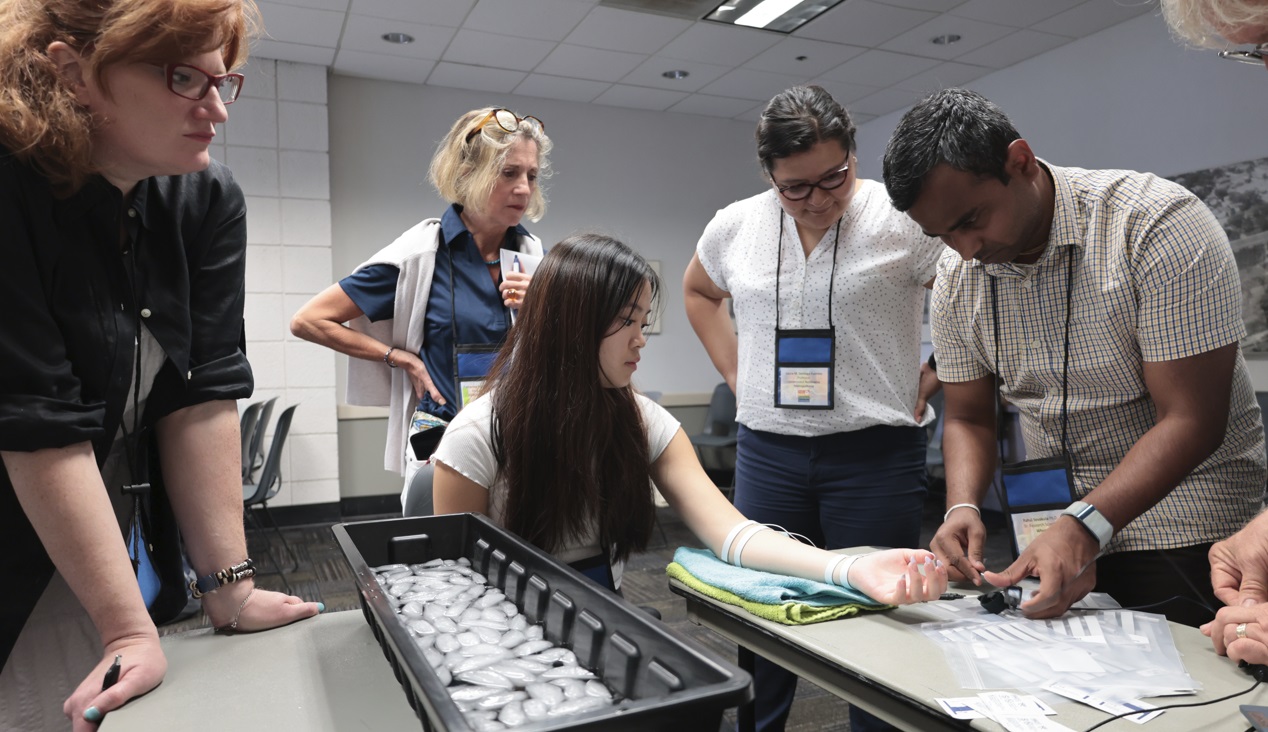
They hailed from across the globe, from Arkansas to Zanzibar and all points between. Students, teachers, researchers, and innovators gathered on the campus of UC Santa Barbara, overlooking the Pacific Ocean. They came to learn, share, and explore breakthroughs and best practices in physiology and related fields. 4T|Phys kicked off July 17 under clear California summer skies, an idyllic setting for discovering the Tools, Trends, Techniques, and Technology driving physiology education and exploration.

4T|Phys 2023 was the third installment in BIOPAC’s highly successful series of biennial industry conferences that began in 2017. After a two-year hiatus during the global Covid-19 pandemic, 4T came roaring back this summer with more workshops, more tracks, more sponsors, more presenters, and more countries represented than ever before. Over the course of three days, nearly 100 attendees participated in hands-on sessions with some of the top minds in physiology research, experiencing the latest tools for gathering and analyzing data.

BIOPAC’s in-house experts were joined by an array of authorities from the fields of physiology, psychology, imaging (fNIRS and fMRI), neuroscience, cardiovascular research, eye tracking, virtual reality (VR), biology, and engineering. Participants took part in workshop schedules drawn from five separate tracks that included fundamentals, which focused on the basics of data acquisition and analysis. The research track took attendees on a deeper dive into techniques and technologies, including recording evoked potentials, screen-based eye tracking, impedance cardiography using trans-radial bioimpedance velocimetry (TREV), stimulus presentation, exercise physiology, and many others. Participants were also able to tour UC Santa Barbara’s state-of-the-art Brain Imaging Lab to see up close how BIOPAC products are being used in both functional MRI (fMRI) and TREV studies.

“It was an incredible experience that left a lasting impact on me by helping me to understand more about physiological data collection and analysis,” said Dr. Parth Trivedi, a 4T|Phys attendee. “The choice of presenters and the topics covered were truly inspiring, offering valuable knowledge and fresh perspectives that enriched my understanding.”

4T|Phys 2023 Attendee MapThis year’s conference featured several new tracks such as a dedicated VR track led by partner company WorldViz. The WorldViz team showcased virtual reality solutions in a series of workshops that introduced how VR is being integrated in physiology and psychology research, explained how to create effective and immersive VR experiments, and demonstrated their latest PRISM technology for creating fully immersive projected 3D virtual environments.

Several other partner companies introduced their technologies and products both in the 4T exhibition hall and in workshop sessions. Argus Science presented their ETVision eye-tracking glasses that synch seamlessly with AcqKnowledge. Cognixion demonstrated the Cognixion One Axon-R—Research Edition wearable BCI-AR computing platform, which is being used to help individuals with neurodegenerative conditions and severe motor impairments communicate and interact with their environments assisted by augmented reality. Seenel Imaging showed off their MedelOpt Systems for whole-head EEG with fNIRS, including new VR integration. Participants also got a chance to try on the Research Ring by Senstream, a new user-friendly wearable research ring, which allows easy recording of EDA, PPG, Temperature, and ECG signals. CNSystems showed off the company’s NIBP continuous noninvasive blood pressure (NIBP) and hemodynamics devices.

If you missed the educational and networking opportunities at 4T|Phys 2023, don’t despair. We will be back again in a few years, bigger and better than ever. Watch this space for updates on our next installment. In the meantime, see our Video Tutorials and Webinars On Demand for trainings and seminars on our products and partners.


Make sure you never miss a BIOPAC event and keep up with the latest Tools, Trends, Techniques, and Technologies by contacting your local BIOPAC sales representative.

Projection VR: Virtual Rooms Turn Science Fiction into Reality

Fans of Star Trek have long marveled at the technological innovations spawned from the imaginations of its creators—from warp drives that bend space to transporters beaming individuals from point A to B. Few of these speculative innovations inspired more wonder than the “holodeck,” a room that creates a simulated sensory experience nearly indistinguishable from reality, where crew members can train, study, or engage in recreation within the space’s artificial environments.

The border between science fiction and fact can be fluid, as proven by the proliferation of virtual reality (VR) technology in recent years, providing an immersive experience like that promised by the fictional holodeck. When thinking about VR in the modern sense, one usually envisions a person fitted with a head-mounted display (HMD) that delivers visual stimuli directly to the eyes, with movement and views controlled by directional sensors in the HMD and hand controllers.

While this can certainly deliver an immersive experience, HMD systems have their limitations. HMDs and controllers are often tethered via cables to the high-end computers needed to generate realistic imagery. This can limit the user’s ability to move and interact naturally in a virtual environment. A variation is something much closer to the holodeck of science fiction—a room in which a virtual environment is projected onto walls rather than displayed on a headset screen. This is the world of projection VR.

Virtual reality innovators like WorldViz are taking projection VR to the next level by creating highly-customizable virtual environments that can be scaled and adapted to a variety of tasks. One application in which VR projection rooms are being used is to train emergency medical technicians (EMT) and other first responders in realistic environments, such as on a virtual roadside. Trainees can move about performing first aid as cars seem to rush by, safe from real traffic hazards.

Outside of training and educational applications, projection VR and VR rooms have proven to be affective in a variety of research studies. These technologies have been used in machine learning and behavioral studies focusing on children with autism spectrum disorders (ASD). In such applications, HMD systems may cause motion sickness or discomfort for the participants with ASD. Projection rooms, however result in no significant negative impacts on the participants’ comfort while still providing an immersive experience.

VR Driver StudyAs mentioned, projection VR experiences allow for additional technologies to be introduced seamlessly into the virtual experience. A 2020 study of driver gaze habits integrated driving environments created in Vizard 5.0 and projected on a screen with eye tracking to determine how drivers process visual information behind the wheel. Participants were able to interact with real driving controls while their “vehicle” moved through the virtual environment as they focused on visual cues.

VR projection rooms are no longer restricted to fictional flights of fancy. Their real world use is limited only by the imaginations of those applying these potent tools in the classroom and research lab.


For more information on how projection VR can benefit research, education, and training, join a webinar hosted by BIOPAC as we explore this virtual frontier where science fiction becomes science reality.

error: Content is protected !!