A Remarkable 2024: Introducing Tools for a Better and Brighter Research Future

As 2024 winds down and we ready the confetti to ring in 2025, we at BIOPAC Systems Inc. want to toot our horn after wrapping up an exciting year of growth and innovation. This year brought some big wins for the research community, thanks to BIOPAC’s efforts to make physiological data acquisition and analysis more accessible and efficient than ever. Two major milestones were the launch of the MP200 system, the latest evolutionary step for our flagship data acquisition platform, and two feature-rich release updates to our AcqKnowledge data acquisition and analysis software.

Introducing the MP200: A New Achievement for Data Acquisition

MP200The MP system series has been the backbone of BIOPAC’s efforts to provide powerful and yet accessible data acquisition tools to researchers. Released in November, the newest incarnation of MP device, the MP200, ushers in a new era of precision, reliability, and flexibility for data acquisition. Designed to meet the evolving needs of researchers, the MP200 offers unparalleled scalability and compatibility with a wide range of physiological signals and measurements. Key enhancements include the following:

  • Enhanced Signal Quality: The MP200 uses advanced signal processing algorithms to ensure superior data integrity across diverse research applications, from neuroscience to exercise physiology.
  • Modular Design: The MP200’s modular architecture allows seamless integration with BIOPAC’s extensive sensors and amplifiers, creating near-limitless customization possibilities for complex experimental setups.
  • Future-Ready Connectivity: The MP200 facilitates real-time collaboration and analysis with high-speed data transfer protocols and cloud integration support.

Researchers will benefit from the MP200’s improved ability to streamline workflows and deliver insights with unmatched precision. This latest system exemplifies BIOPAC’s dedication to fostering groundbreaking discoveries in physiology and related fields.

AcqKnowledge Updates: Pioneering the Future of Data Analysis

AcqKnowledge data acquisition and analysis software has been a go-to tool for researchers for decades, and 2024 saw two major updates that brought exponential improvements: versions 5.0.10 and 6.0.0. These updates are packed with features that make data collection and analysis easier and more comprehensive.

One of the most impactful new licensed features is the integration of Lab Streaming Layer (LSL). This feature lets researchers sync and stream data from multiple sources in real time. Whether one is working on interdisciplinary projects or using several devices at once, LSL makes it simple to bring everything together for analysis. LSL also opens the door to a host of new products from our partners for which BIOPAC has added integration in AcqKnowledge. These include the Axon-R brain-computer interface (BCI) hub with augmented reality (AR) and artificial intelligence (AI) and the APEX wearable, wireless EEG system. Other new products have also been integrated into AcqKnowledge and are now available from BIOPAC, including new eye tracking products from Tobii and EyeLogic.

Another game-changing licensed addition, AcqKnowledge Cloud, allows users to securely store their data online, streamlining processes to access, share, and work on data from any location. Collaboration between teams is also easier, and users no longer need to worry about managing large files on their local system.

These updates are all about making work less complicated and more effective for researchers. With tools like these, diving into complex data, finding patterns, and pushing one’s research further has never been more straightforward.

Looking Ahead to 2025

More excitement is on the horizon for BIOPAC. Not only are several new product updates and releases in the works, but we will also be hosting our bi-annual 4T Human Physiology Conference on Tools, Trends, Techniques, and Technologies. Customers, educators, researchers, and other experts in Physiology and related fields will gather in Santa Barbara, California July 14-16. Participants will share knowledge, take part in hands-on workshops, and see what is shaping the future of research. Learn more and sign up today. Hopefully, we will be seeing you in 2025.

The Year in Review: Top Physiology and Neuroscience Research Stories 2022

Another calendar year has come and gone. COVID-19 remains a reality, but we continue to adapt to the ongoing pandemic and find new ways to overcome the challenges it poses at work, at school, at home, and in the lab. And speaking of research, 2022 proved to be a banner year for innovation and breakthroughs in the sciences, particularly in the physiological and neurological fields. Here is a quick round-up of some of the research stories that caught our attention.

Brain Implant Allows Locked-in Patient to Communicate

A man in his late 30s has been given the ability to communicate for the first time since being left in a completely locked-in state by amyotrophic lateral sclerosis (ALS). The patient, who was unable to move or even open his eyes, can communicate again thanks to a brain-computer interface (BCI) comprising two microelectrode arrays implanted in his motor cortex. The procedure was carried out by a team of researchers at the University of Tübingen in Germany. “This study answers a long-standing question about whether people with complete locked-in syndrome (CLIS) – who have lost all voluntary muscle control, including movement of the eyes or mouth – also lose the ability of their brain to generate commands for communication,” wrote Dr. Jonas Zimmermann, one of the co-authors of the study resulting from the procedure.

First Scan of Dying Human Brain Provides Insight into Near-death Experience

near-death experienceAn EEG recording from a dying 87-year-old patient has provided researchers with the first glimpse of the neurophysiological phenomena that occur shortly after cardiac arrest. While survivors of so-called near-death experiences have anecdotally reported intense and surreal experiences that include panoramic memory review, out-of-body experiences, and other hallucinatory phenomena, little is understood about what causes such occurrences. While experiments have been carried out on animal subjects showing a hypoactive state of brain activity under such conditions, this new data provided researchers with the first evidence “that the human brain may possess the capability to generate coordinated activity during the near-death period.”

Biomembrane Research May Advance Understanding of Memory in Computers and Humans

Drawing inspiration from the living realm, scientists at the U.S. Department of Energy’s Oak Ridge National Lab are applying biological concepts to next-generation computers with implications for both human health and cutting-edge computing. Researchers were able to demonstrate that an artificial cell membrane could imitate one of the hallmarks of biological memory and learning—long-term potentiation (LTP). The study, published in the Proceedings of the National Academy of Sciences, shows for the first time that a cell membrane by itself, without the benefit of proteins or other embedded biomolecules, can carry out LPT over several hours. The pure lipid membrane, which was formed using lipid-covered water droplets, represents the first nanoscale structure in which memory can be encoded. The discovery opens the door to neuromorphic computing, which imitates the way the human brain stores and processes information and is more efficient than traditional computing.

This is just a sampling of the exciting developments catching our attention in the sciences this year. For more explorations of the intersection of cutting-edge technology, physiology, and neuroscience, join BIOPAC at the T4 Human Physiology Conference in summer 2023. And have a happy New Year!


To learn more about BIOPAC’s role in exciting breakthroughs in neuroscience and physiology, and how we can assist you in achieving your research and teaching goals, contact your local sales representative today.

Evoked Potentials: Low-amplitude Signals for High-value Data

Researchers studying the nervous system have a host of physiological signals at their disposal to provide critical data on neurological function. Various signals present advantages and disadvantages, depending on the demands of the research being conducted. Evoked potentials offer a particularly effective means of measuring the nervous system’s response to certain stimuli, notably visual and auditory cues.

Evoked potentials are employed in both research and clinical settings to measure electrical activity in the central nervous system. Stimulation of specific sensory neural pathways produces this electrical activity, allowing researchers to see the speed and thoroughness with which these signals reach the brain. Evoked potentials provide researchers with heightened precision when isolating and localizing a participant’s response to stimuli.

Because evoked potential amplitudes tend to be low, from less than one to just a few microvolts, these signals can be difficult to differentiate from other higher amplitude signals and background noise. This is resolved by using signal averaging to separate the low-amplitude signals from the noise. Multiple readings are taken with evoked potential signals time-locked to the stimulus. Averaging these measurements allows the evoked potential to be filtered from the random signal noise.

Along with providing useful data for research, evoked potential tests are commonly used in clinical settings to diagnose and explore treatments for a range of disorders such as multiple sclerosis (MS), epilepsy, glaucoma, neuropathies, Alzheimer’s, and others. In both research and clinical applications, evoked potential tests provide several advantages over using other approaches since they are noninvasive, painless, and provide results more quickly than other neurological scans, such as MRI. Types of evoked potentials can be categorized by the stimuli with which they are associated. Visual evoked potentials (VEP) are triggered by visual stimuli such as light flashes or by participants viewing certain patterns. Auditory evoked potentials (AEP) measure responses to sound stimuli such as clicks. Somatosensory evoked potentials (SEP) are triggered by electrical stimulation of peripheral nerves.

A 2022 study by researchers at the Autonomous University of Aguascalientes in Mexico evaluated the effectiveness of using VEP waveforms embedded in electroencephalographic (EEG) signals to determine the health of the optic nerve. The team employed an MP36 data acquisition system connected to an SS2LB lead set to record EEG signals from study participants. eyeThe signal data were used to create a database of VEPs that could be processed with analysis software for the early detection of glaucoma and other optic nerve-related illnesses.

A similar study combined the use of EEG signals with VEP to examine how participants recognize emotion in others. Researchers from two universities in China relied on a variation of VEP known as steady-state visual evoked potential (SSVEP), which exhibits distinctive frequency and phase properties. EEG signals were recorded via a BIOPAC data acquisition unit while participants were shown flickering images representing three emotional states—delight, sadness, and anger. The study found a positive correlation between SSVEP amplitude, alpha-frequency entrainment, and accurate identification of emotion.

These are just a few examples of how evoked potentials provide researchers with valuable insight into the central nervous system’s response to stimuli and its relationship to a wide range of physiological states. For additional information on how to use BIOPAC hardware and AcqKnowledge to stimulate a range of senses using electrical, auditory, visual, haptic, scent, and thermal stimuli and record evoked potentials, check out our webinar on Exogenous and Stimulus-related Evoked Potentials.


To learn more about how your study can benefit from using BIOPAC hardware and software to record and analyze evoked potential data, contact your local sales representative.

fNIRS and the Brain: How cognition is defined and recorded

As the most crucial organ of the human body that quintessentially defines humanity, the brain is still our greatest puzzle to solve. Medical doctors, neuroscientists, physiological scientists, and others have been trying to understand how its functions affect our actions, dating all the way back to the dark days of phrenology. In our study of the brain, the popular research is directed towards conscious thought, thinking, or the scientific term, cognition. In physical terms, the brain is separated into different areas of grey matter for different tasks, and like an electricity operator supplies a power grid with different levels of electricity on demand, regions of the brain gearing up for critical thought are saturated with fresh, oxygenated blood to boost performance: again a sign of an active cognitive state.

In modern scientific research, one of the popular means to measure this oxygenation is through Spectroscopy—more specifically, a unique field called functional near infrared spectroscopy. How does fNIRS work in measuring human cognition? These measurements are performed with optical diodes and sensors measuring a near infrared wave pattern.

Dedicated fNIRS software displaying tissue oxygenation
A graphical display of oxygenation in the prefrontal cortex

Near infrared light is sent through the skull in a spectrum that can pass through bone and tissue, and the sensors record the plots of photons absorbed by tissue or reflected back. Naturally with such a delicate subject such as the human brain, this process is both safe for the participant and painless.

The practical benefits of this spectroscopic measurement are numerous—continuous and real time values on changes in hemoglobin levels in the prefrontal cortex (measured as oxyhemoglobin [Hb] and deoxygenated hemoglobin [HbO2]) as subjects perform different tasks, either in a stationary recording position or in a mobile experiment environment. fNIRS technology offers standalone and field-deployable technology able to determine localized brain activity. Modern recording tools such as the fNIR103M offer a wireless recording platform, so research subjects can react naturally in real-world situations outside of the lab environment while continuously recording spectroscopic data.

fNIRS is a popular signal to record simultaneously with other physiological signals such as heart rate, ECG, HRV, EMG, respiration, and more to get a clear picture of a subject’s physiological reactions. Application areas for this signal typically include pain assessment, geriatrics, attention, sports science, Human-Computer Interface, virtual reality, stress, workload assessment, and learning. Thousands of scholarly citations have been written featuring functional near-infrared spectroscopy, as studies visualize how the brain works through cognitive problems and processes. To further your physiological research, BIOPAC’s AcqKnowledge software can record multiple physiological signals at once and provide automated analysis tools for event related potentials and ensemble averaging. fNIRS easily integrates with other physiological and neurobehavioral methods of assessing brain activity, including eye tracking, pupil reflex, respiration, and electrodermal activity.

BIOPAC Systems, Inc. provides life science researchers and educators with data acquisition and analysis systems that inspire people and enable greater discovery about life. Visit us at www.biopac.com. We invite you to look at our fNIRS webinars from BIOPAC. BIOPAC also offers a line of wired and wireless fNIRS imagers for research and education.

Eye Tracking Basics

eye tracking basics
Eye Tracking Basics | Eye Structure

To understand how eye tracking works, it is important to have a basic knowledge of the structure of the eye.

  • pupil—an aperture, or opening, in the iris that allows light to enter into the eye unless viewed exactly on-axis with a light source, the pupil appears black
  • iris—the colored part of the eye, opens and closes to control the pupil size
  • cornea—a thin, film-like tissue that covers the eye
    • on its way to the pupil, light passes through the cornea
    • the cornea is mostly transparent; however, some light is also reflected from the cornea
  • sclera—the white part of the eye

Some eye tracking systems, such as ETVision, use a tracking technique known as “Pupil to CR” Tracking that uses the relationship between two eye features, the black pupil and mirror reflections from the front surface of the cornea (Corneal Reflections, or CRs), to compute gaze within a scene.


pupil-to CR- eye tracking technique
“Pupil to CR” eye tracking

Light from a pair of harmless near infra-red LEDs on the head gear illuminate the eye area. The near IR light is almost invisible to the user, so it does not cause a distraction, however it is visible to the eye camera. The mirror reflections of these light sources from the front surface of the cornea (CRs) appear in the camera image as a pair of bright dots. When the eye rotates in its socket, the center of the pupil moves relative to the spots. By comparing the relative position of the pupil and the CRs, the eye tracking system can compute the pointing direction of the eye visual axis relative to a coordinate frame centered at the scene camera.

During periods when the headgear remains stationary on the head, eye gaze direction can also be computed from pupil or CR position alone, and this can allow the system to continue to compute gaze when only a subset of the eye image features can be successfully identified. By computing the point at which the lines of gaze from the two eyes converge, the gaze point can be represented as spot on the scene camera image.

Since the geometry of the eye structures and the position of the optics with respect to the face vary somewhat from person to person, gaze computation accuracy can be improved by incorporating data from calibration points (points at which the person wearing the optics is known to be fixating a particular point on the scene camera image). Excellent accuracy is often achieved with a single calibration point, but can sometimes be improved with additional points.

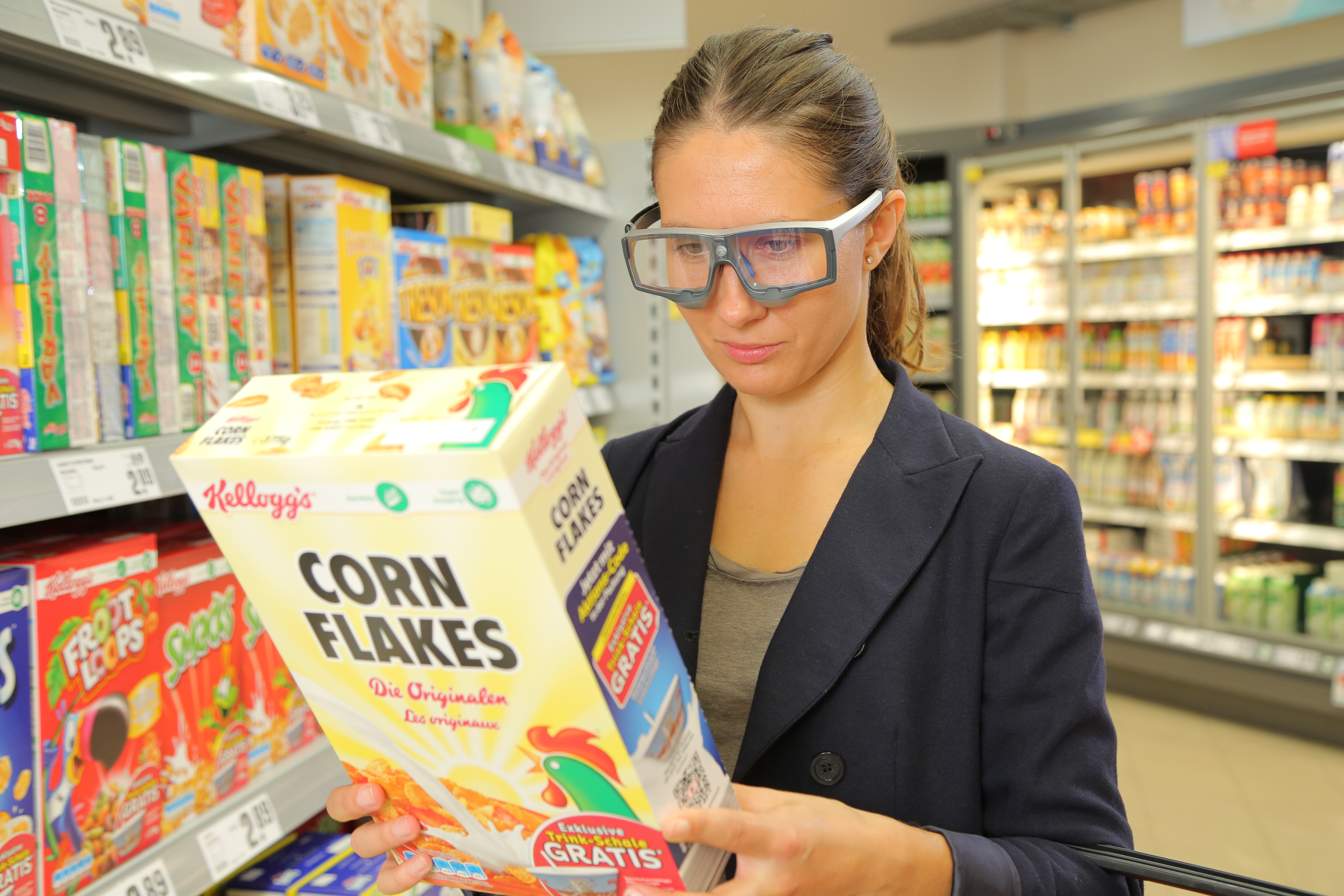
Eye tracking has many specific applications for academic research, HCI, market research (ergonomics & design), sports performance, virtual reality, etc., and can easily be added to any study to increase feedback from participants in any environment.

Adapted from the ETVision Manual 


Ready to learn more?

Watch Eye Tracking Fundamentals now or visit our Webinars and Video Tutorial pages.

BIOPAC offers a wide array of wired and wireless equipment that can be used in your research. For more information on solutions for recording and analyzing life science signals and measurements, visit the Research > Applications section on the BIOPAC website.

The Physiology of Consumer Buying Habits

On “Black Friday” in the US, shoppers will come out in search of great deals, and researchers can measure the many physiological factors that motivate shoppers other than deals and price cuts.

Black Friday is one of the most exciting days for consumers in the United States. With the holidays right around the corner, significant deals and price cuts incentivize people to do bulk gift shopping. But is price the only factor influencing shoppers to dedicate hours waiting in line for a product?

In a neurophysiology study by Alexander et al., researchers found that participants who received a coupon while shopping online had a significant increase in oxytocin and a decrease in cortisol. A BIOPAC research system was used to gather ECG, respiration, and skin conductance data while the participants browsed a commerce website.

Another article by Ha-Brookshire and Bhaduri measured ECG response to stimuli that tested consumers’ perceived trust of businesses. The BIOPAC MP36R was used to record participants’ heart rates while they read negative reviews of an apparel business. The results found lower heart rate and less trust were correlated with the less favorable comments.

Conversely, a consumer research study by Langner et al. found that consumers’ love of brands is similar to their love of friends. Signals measured included EDA, EMG, ECG, and BPV, and were recorded by BIOPAC MP160/MP150 hardware to measure arousal levels while participants viewed different brand and interpersonal stimuli.

BIOPAC offers a variety of equipment that can be used in studies similar to the ones presented. To find more information on solutions for recording and analyzing signals such as EEG, EMG, respiration, skin conductance using the MP160/MP150, MP36, and other platforms, you can visit the individual application pages on the BIOPAC website. If you are interested in reading other related studies, visit the publications page on the BIOPAC website.

BIOPAC Systems, Inc. provides life science researchers and educators with data acquisition and analysis systems that inspire people and enable greater discovery about life. Visit us at www.biopac.com.

The Physiology of Election Decision-Making

The psychophysiological factors of stress, the behaviors of others, and of introception can play major roles in decision-making, and BIOPAC systems provide measurements of how physiological factors such as these influence decisions.

People experienced varying stress levels because of the 2016 US presidential election. There are a variety of factors that can impact voting behaviors and decision-making. Several recent studies using BIOPAC systems investigated the psychophysiological effects of stress, the behaviors of others, and introception on decision-making.

Stress has been shown to be very influential in decision-making. In their study, Yamakawa, Ohira, and Mastunga Isowa (2016) investigated effects of acute stress and risk taking in decision-making. Participants were asked to perform a decision-making choice where they either kept or bet the money they were given. Cardiodynamic activity was measured with ECG using a BIOPAC MP system. Results suggest that with an increase in cortisol, adrenaline, heart rate, and subjective stress, participants were likely to make fewer risky choices. So, high levels of stress may be key in helping make better decisions when selecting a future president.

Perhaps it’s not stress that will influence the choice of the next POTUS (President of the United States), but rather the behaviors of others. Work by Bault, Joffily, Rustichini, and Coricelli (2011) sought to compare private and social decision-making to discover the effect of social comparison on risky choices. The objective of the study was to understand more about how individuals evaluated the outcomes of their decisions in private as opposed to in a social context. Combining data from functional MRI (FMRI) and skin conductance recordings, subjects’ reactions were measured using a BIOPAC MP150 System. Researchers found that participants took significantly longer to make a decision in a social setting than in a private one.

In the end, many feel that it is important to listen to your heart when deciding who you find qualified to be the next president. A study by Dunn et al. (2010) examined whether introception moderates the coupling of bodily responses to emotional experience and intuitive decision-making. Bodily response and heart rate were recorded using a BIOPAC Research System and electrodes to measure introception through changes in heart rate. Researchers found that introception was not related to arousal, valence ratings, or heart rate response to images.

For more information on BIOPAC’s wide range of tools for recording, displaying, and analyzing physiological measurements from human and animal subjects including respiration, heart rate variability, ECG and EDA, visit BIOPAC’s  psychophysiology page and view BIOPAC’s full line of electrodes, amplifiers, and wearable, wireless transmitters and loggers.

BIOPAC Systems, Inc. provides life science researchers and educators with data acquisition and analysis systems that inspire people and enable greater discovery about life. Visit us at www.biopac.com.

Think As Scientists Think—Empirical Research Skills

Learning to think as scientists think is empowering and drives this process and “Hard” and “soft” research skills combine well with Biopac Student Lab Lessons.

(Photo © 2016 Knowledge Growers, Inc.)

By Howard Iver Thorsheim, Ph.D., St. Olaf College

“Hard” and “soft” research skills combine well with Biopac Student Lab Lessons; for example:

  • Working as members of cooperative-learning teams;
  • Learning about basic psychophysiological measures;
  • Organizing supplies;
  • Following a protocol to greet a participant;
  • Explaining proposed procedure, and obtaining written informed consent using a form they draft;
  • Preparing participant, placing electrodes, and manipulating independent variables;
  • Debriefing participant;
  • Analyzing and graphing results;
  • Writing up research results in APA format.

Since the goal is learning skills for thinking, many of the usual requirements for rigorous research headed for publication can be relaxed for beginning students. This can motivate students for advanced student research honors projects or faculty/student research. Some examples of requirements that can be relaxed include naive participants (team members can serve as experimental participants in each other’s explorations—availability samples), sample sizes large enough to attain statistical power (instead two or three can be sufficient), and random assignment to conditions.

Learning to think as scientists think is empowering and drives this process, and some examples include students thinking about:

  • Articles of interest students find in data base searches that lead to their own research questions to explore;
  • Which psychophysiological measures they have practiced would provide information to help them learn more about their research question;
  • What they want their participants to do;
  • Key issues of experimental and statistical control, and
  • Any other equipment or supplies they might need to arrange for in addition to what is available within the limitations of available apparatus and facilities.

Before they may proceed, beginning students present their thinking on such issues to me as their consultant.

I provide a rubric with many tips, such as noting what they observed during the experiment that could have unintentionally influenced the results, describing strengths and limitations of their conclusions based on their findings, and answering the “So what?” question to extend their findings into their own life and think about the implications such findings might have for them.

See following for more ideas for teaching empirical research skills to help students think as scientists think, with research support:

Thorsheim, H. I. (2015). Experimental psychology. In D. S. Dunn (Ed.), The Oxford Handbook of Undergraduate Psychology Education. New York: Oxford University Press, 387-401. (Focus is.)


Learn more about BIOPAC’s education solutions, including complete teaching systems for psychophysiology and the life sciences. BIOPAC also provides a wide range of research systems for recording, displaying, classifying, and analyzing psychophysiological measurements.

BIOPAC Systems, Inc. provides life science researchers and educators with data acquisition and analysis systems that inspire people and enable greater discovery about life. Visit us at www.biopac.com.

Professor Thorsheim is a licensed Psychologist, educator, and author. He has published or presented over 125 papers, journal articles, books, book chapters or monographs, and received a patent in 1985 as a co-inventor for an educational book design with interactive elements. His work has been funded by marquee foundations across the globe. His most recent work is Doing Psychophysiology: Getting Started, available from Knowledge Growers, Inc., available as an iBook download in 51 countries.

Forming Cooperative Learning Groups: The Challenge

By Howard Iver Thorsheim, Ph.D., St. Olaf College. Extensive research has repeatedly validated the value of cooperative learning. Yet, attempts to form cooperative learning groups too often failed to meet the expectations of both educators and students.

Photo © 2016 Knowledge Growers, Inc.

By Howard Iver Thorsheim, Ph.D., St. Olaf College

Howard Iver Thorsheim is Professor of Psychology and Neuroscience at St. Olaf College, Northfield, Minnesota, USA. In these blogs he offers his first-person insights into effective teaching techniques gleaned from a combination of scholarly research and over 40 years in the classroom.

Extensive research* has repeatedly validated the value of cooperative learning, and many educators desire to incorporate cooperative learning into their classrooms. Yet, my attempts to form cooperative learning groups too often failed to meet the expectations of both me and my students.

It took me many tries before I developed a simple process, which was stimulated by a question from a student. The process is an effective way to form cooperative learning groups for students to work together in doing psychophysiology (that’s a favorite name I use to describe teaching and learning psychophysiology in class and lab). The process is one that I have refined and used successfully ever since.

Psychophysiology content, research methods, and learning to use technology for measurement are my goals, as well as helping students learn take-away “soft” skills that will be useful to them in any setting, like how to work cooperatively with others.

But before they could cooperate, I needed to have students get into groups. My first tries to form groups disappointed me: I tried using the class list, taking the first three people in the list to make a group, and then the next three people and made them a group, and so on.

Another time I randomly picked groups of three and assigned them to groups.

Yet another time I thought that providing choice in choosing teammates would be a good reason for success, and asked students to form their own groups of three.

None of these methods generated the kind of “special spark” I was looking for.

I was about to decide that it did not make any difference how groups were formed, and that besides, forming groups just made for more work for them and for me. Then, I decided to ask my next semester students if they had any ideas about forming cooperative groups.

In Part 2 of this blog, I’ll share what I learned and how it worked.

* Johnson, D. W., Johnson, R. T.,  & Smith, K. A. (2014). Cooperative learning: Improving university instruction by basing practice on validated theory. Journal on Excellence in College Teaching, 25(3-4), 85-118. (Find an abstract of their article here). A quick way to get to that information is to download a copy of a 2013 draft version of the 2014 Johnson, Johnson & Smith article, available here.

Learn more about BIOPAC’s education solutions, including complete teaching systems for psychophysiology and the life sciences. BIOPAC also provides a wide range of research systems for recording, displaying, classifying, and analyzing psychophysiological measurements.

BIOPAC Systems, Inc. provides life science researchers and educators with data acquisition and analysis systems that inspire people and enable greater discovery about life. Visit us at www.biopac.com.

Professor Thorsheim is a licensed Psychologist, educator, and author. He has published or presented over 125 papers, journal articles, books, book chapters or monographs, and received a patent in 1985 as a co-inventor for an educational book design with interactive elements. His work has been funded by marquee foundations across the globe. His most recent work is Doing Psychophysiology: Getting Started, available from Knowledge Growers, Inc., available as an iBook download in 51 countries.

.

error: Content is protected !!