
2025: The Year in Review

As 2025 winds to a close, there is much to celebrate both here at BIOPAC and in the ever-expanding frontiers of research that our products engage with every day. Let’s take a quick look at where we have been over the past 12 months and what the future holds.

Popular Posts

Speaking of engagement, this is the time of year when we do a bit of self-assessment and revisit what topics our readers were most inspired by and most interested in. Apparently, many of our readers are closet gamers at heart, because our blog on research on game design and gaming impacts drove more eyes to our site than any other topic this year, followed by posts on cognitive neuroscience and aging and the human impact of isolation.

New Products and Updatesclimbing kid

On the heels of the 2024 release of our flagship MP200 data acquisition and analysis system and a significant upgrade to AcqKnowledge software, 2025 concludes with another milestone: the imminent release of AcqKnowledge 6.0.2. This latest version features a host of improvements and additions, including full integration of MedelOpt+, which blends whole-head functional near-infrared spectroscopy (fNIRS) with electroencephalography (EEG) in a single, highly flexible device.

BIOPAC in the Lab

Every year, BIOPAC products continue to drive the most exciting research in physiology, psychology, and neurology, and 2025 was no different. Each month, we highlight breakthrough studies in which BIOPAC played a role in gathering and analyzing key data. These are usually centered around a theme and feature research published in the last few years. To close out the year, we like to spotlight a couple of significant studies from 2025 that didn’t get mentioned.

A collaborative study by researchers from the University of Georgia and Beijing Normal University examined how mothers and children coordinate their physiological responses during stressful interactions. Using BIOPAC data acquisition systems coupled with wireless ECG transmitters, the team simultaneously recorded cardiac activity from each participant pair as they completed structured challenge tasks. This setup provided the temporal precision needed to track changes in heart rate and moment-to-moment autonomic synchrony, revealing how caregivers and children influence one another biologically during shared stress. The study found that greater synchrony was linked to both emotional dynamics and regulatory behaviors during the tasks, highlighting the deep coupling between social relationships and physiological responses. The wireless BIOPAC configuration enabled naturalistic interaction while capturing high-quality dyadic data, a persistent challenge in synchrony research.

In its first full year of availability, the MP200 is already making waves in the research community. At Guangdong University of Science and Technology in China, researchers examined how head-shoulder posture and cervical muscle activation differ between college students with chronic neck pain (CNP) and healthy individuals. The team employed surface electromyography (sEMG) recorded with a BIOPAC MP200 data acquisition system and AcqKnowledge software. Researchers placed surface electrodes over targeted neck muscles to record raw EMG signals during various strength tests and physical tasks. Students with CNP demonstrated significantly poorer head and shoulder alignment, reduced neck extensor strength, and altered EMG activity, indicating neuromuscular dysfunction associated with pain. Findings showed the connection between altered posture and impaired muscle function in chronic neck pain. The study demonstrates the effectiveness of surface EMG to support clinical diagnosis and rehabilitation.

For more inspiration as we head into 2026, explore our webinar library for tips, tricks, and methods directly from experts across a range of research fields.


If you are planning to launch a study for 2026, now is the time to reach out to your nearest BIOPAC customer service representative for help finding the right tools to get started.

A Remarkable 2024: Introducing Tools for a Better and Brighter Research Future

As 2024 winds down and we ready the confetti to ring in 2025, we at BIOPAC Systems Inc. want to toot our horn after wrapping up an exciting year of growth and innovation. This year brought some big wins for the research community, thanks to BIOPAC’s efforts to make physiological data acquisition and analysis more accessible and efficient than ever. Two major milestones were the launch of the MP200 system, the latest evolutionary step for our flagship data acquisition platform, and two feature-rich release updates to our AcqKnowledge data acquisition and analysis software.

Introducing the MP200: A New Achievement for Data Acquisition

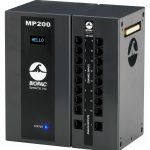
MP200The MP system series has been the backbone of BIOPAC’s efforts to provide powerful and yet accessible data acquisition tools to researchers. Released in November, the newest incarnation of MP device, the MP200, ushers in a new era of precision, reliability, and flexibility for data acquisition. Designed to meet the evolving needs of researchers, the MP200 offers unparalleled scalability and compatibility with a wide range of physiological signals and measurements. Key enhancements include the following:

  • Enhanced Signal Quality: The MP200 uses advanced signal processing algorithms to ensure superior data integrity across diverse research applications, from neuroscience to exercise physiology.
  • Modular Design: The MP200’s modular architecture allows seamless integration with BIOPAC’s extensive sensors and amplifiers, creating near-limitless customization possibilities for complex experimental setups.
  • Future-Ready Connectivity: The MP200 facilitates real-time collaboration and analysis with high-speed data transfer protocols and cloud integration support.

Researchers will benefit from the MP200’s improved ability to streamline workflows and deliver insights with unmatched precision. This latest system exemplifies BIOPAC’s dedication to fostering groundbreaking discoveries in physiology and related fields.

AcqKnowledge Updates: Pioneering the Future of Data Analysis

AcqKnowledge data acquisition and analysis software has been a go-to tool for researchers for decades, and 2024 saw two major updates that brought exponential improvements: versions 5.0.10 and 6.0.0. These updates are packed with features that make data collection and analysis easier and more comprehensive.

One of the most impactful new licensed features is the integration of Lab Streaming Layer (LSL). This feature lets researchers sync and stream data from multiple sources in real time. Whether one is working on interdisciplinary projects or using several devices at once, LSL makes it simple to bring everything together for analysis. LSL also opens the door to a host of new products from our partners for which BIOPAC has added integration in AcqKnowledge. These include the Axon-R brain-computer interface (BCI) hub with augmented reality (AR) and artificial intelligence (AI) and the APEX wearable, wireless EEG system. Other new products have also been integrated into AcqKnowledge and are now available from BIOPAC, including new eye tracking products from Tobii and EyeLogic.

Another game-changing licensed addition, AcqKnowledge Cloud, allows users to securely store their data online, streamlining processes to access, share, and work on data from any location. Collaboration between teams is also easier, and users no longer need to worry about managing large files on their local system.

These updates are all about making work less complicated and more effective for researchers. With tools like these, diving into complex data, finding patterns, and pushing one’s research further has never been more straightforward.

Looking Ahead to 2025

More excitement is on the horizon for BIOPAC. Not only are several new product updates and releases in the works, but we will also be hosting our bi-annual 4T Human Physiology Conference on Tools, Trends, Techniques, and Technologies. Customers, educators, researchers, and other experts in Physiology and related fields will gather in Santa Barbara, California July 14-16. Participants will share knowledge, take part in hands-on workshops, and see what is shaping the future of research. Learn more and sign up today. Hopefully, we will be seeing you in 2025.

error: Content is protected !!