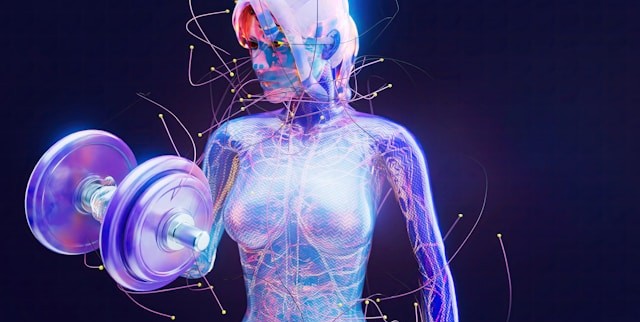
Muscles in Motion: Electromyography in Physiological Research

When we think about the human muscular system, movement often comes to mind. Activities such as running, lifting, and maintaining posture all rely on coordinated skeletal muscle activity, while cardiac muscle drives circulation and smooth muscle supports essential functions like digestion. Yet muscles do more than move us from point A to B; they also reflect what is happening inside the body. Patterns of muscle activation can reveal information about physical effort, fatigue, coordination, and recovery, as well as emotional expression, stress, and cognitive engagement. Electromyography (EMG) is a widely used technique for measuring the electrical signals generated by muscles during contraction, providing researchers with a direct and objective means to study both physiological function and the links among the nervous system, behavior, and mental state. By capturing muscle activity that may be too subtle to observe visually, EMG enables precise investigation of processes ranging from motor control and performance to emotional and stress-related responses.

There are several types of EMG, each suited to different research needs. Surface EMG (sEMG) uses small sensors placed on the skin to detect activity from nearby muscles and is the most common approach in behavioral and human performance studies. Intramuscular EMG involves inserting a fine-needle electrode directly into a muscle to record activity from specific muscle fibers, often used in clinical or specialized research settings. Facial EMG (fEMG), a form of surface EMG, focuses on facial muscles. By measuring muscle activity associated with smiling or frowning, fEMG allows researchers to study emotional responses, even when those responses are subtle or not consciously expressed.

One of the key strengths of EMG is its ease of integration with other physiological measurements. In many studies, EMG is recorded alongside electrocardiography (ECG), which measures heart activity; electroencephalography (EEG), which records electrical activity in the brain; functional near-infrared spectroscopy (fNIRS), which tracks changes in brain oxygenation; and eye tracking, which monitors visual attention and gaze patterns. By synchronizing these signals in time, researchers can better understand how different systems in the body work together. For example, combining EMG with EEG can reveal how brain activity leads to muscle movement, while pairing EMG with ECG can show how physical effort relates to heart responses during stress or exercise. This multimodal approach is central to advancing research in areas such as emotion, cognition, and human performance.

EMG also has important real-world applications. In rehabilitation, it helps clinicians monitor muscle recovery after injury. In ergonomics, it provides objective data about muscle strain in the workplace. In sports science, EMG helps optimize training and performance by identifying how and when muscles are activated. Increasingly, EMG is also used in human–machine interfaces, such as systems that allow people to control prosthetic limbs using their muscle signals. Its ability to detect fine-grained changes in muscle activity makes EMG a valuable tool across both research and applied settings.

Best practices for EMG data quality begin with careful electrode placement and attention to potential sources of noise. For sEMG and fEMG, electrodes should be placed over the “belly” of the target muscle, aligned with the muscle fibers, and spaced consistently to capture clean, interpretable signals. Gently cleaning the skin and, when appropriate, lightly abrading the surface helps reduce impedance and improve signal quality. In fEMG studies, precise and repeatable placement over well-defined facial muscles is critical, as these muscles are small and closely spaced. To minimize noise and artifacts, researchers should secure electrodes and cables to prevent movement, ask participants to limit unnecessary body motion, and ensure proper grounding of the recording system. Electrical interference from nearby equipment, power lines, or poor cable management can also contaminate EMG signals, so shielded cables and a controlled recording environment are recommended. Finally, synchronizing EMG with other physiological signals using a common acquisition system helps prevent timing errors and reduces the need for later corrections, resulting in cleaner data and more reliable conclusions.
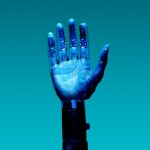
hand mechanicsRecent studies demonstrate how EMG continues to expand into new and innovative areas. In a study published in Results in Engineering, a team of researchers from China developed a low-computational method for recognizing hand gestures from EMG signals to improve prosthetic device control. The researchers extracted key features from EMG recordings and used a lightweight machine-learning model, a multilayer perceptron (MLP), to classify gestures in real time. EMG data were collected using a four-channel BIOPAC data acquisition system running Biopac Student Lab (BSL) software. Surface Ag/AgCl electrodes were placed on four forearm muscles to capture relevant muscular activity. The study showed that accurate gesture recognition can be achieved without heavy computational requirements, making the system more practical for everyday use. This work highlights how EMG can support the development of more responsive, accessible assistive technologies.

Another study, conducted by a team of researchers from Mahidol University in Thailand and presented in the Institute of Electrical and Electronics Engineers (IEEE) proceedings, explored how combining EMG with motion sensors can improve ergonomic assessments. Focusing on occupational health, the study integrated surface EMG with data from an inertial measurement unit (IMU), a sensor that tracks movement and orientation. The researchers used the IMU to calculate Rapid Upper Limb Assessment (RULA) scores—a common method for evaluating postural risk—while EMG data collected via a BIOPAC four-channel research system provided insight into muscle activity. By combining these measures, the team found that posture alone did not always reflect actual muscle strain. The inclusion of EMG revealed additional muscle stress that might otherwise go unnoticed, suggesting that multimodal approaches can lead to more accurate workplace assessments and better injury-prevention strategies.

Researchers from Louisiana State University and the Pennington Biomedical Research Center in Baton Rouge, Louisiana, examined how training experience influences muscle activation and fatigue during resistance exercise performed with and without blood flow restriction (BFR) in young men. The study, published in Physiological Reports, compared trained and untrained participants while they completed knee extension exercises under low-, medium-, and high-load conditions. The team used sEMG to measure muscle excitation and total muscle activation in the vastus lateralis, with participants fitted with a portable BIOPAC BioNomadix Wireless EMG system. EMG signals were sampled at 2000 Hz and analyzed using a data acquisition system with AcqKnowledge software, allowing the researchers to quantify both peak muscle excitation and overall activation across repetitions. The results showed that low-load exercise with blood flow restriction produced lower peak muscle excitation but substantially greater total muscle activation compared to traditional high-load exercise, regardless of training status. These findings suggest that low-load BFR training may provide an effective alternative for stimulating muscle adaptations while reducing mechanical stress, with potential applications in rehabilitation and strength training programs.

Taken together, these examples illustrate the versatility and effectiveness of EMG in neuroscience, psychophysiological research, and beyond. Whether used to study emotion, improve physical training and workplace safety, or develop assistive technologies, EMG provides a direct link between muscle activity and human behavior. When combined with other physiological measures, it offers a more comprehensive understanding of how the brain and body interact. As research tools and techniques continue to advance, EMG will remain an essential method for exploring brain-body connections. For additional information on how to design studies around EMG, best practices for gathering EMG data, and how to integrate EMG with other signals, check out our webinar on EMG acquisition and analysis.


If EMG will be part of your next physiological or psychophysiological research project, reach out to our knowledgeable staff, who are standing by to help you with each stage of the planning and design process.

Free Your EEG: Wireless and Wearable Systems for the Lab and Beyond

The evolution of wearable technology for recording physiological signals represents a transformative leap for research, particularly when it comes to electroencephalography (EEG). These advancements allow researchers to capture brain activity data in real-world settings, moving beyond the confines of laboratory-based experiments. Mobile and wearable EEG devices utilize wireless technology to transmit data, offering significant advantages over traditional methods.

Everyone aspires to more freedom—to speak, think, or move about as one pleases. Should researchers be any different? Why be shackled to the static wires and cables of the lab, when one can release study participants with the help of mobile and wearable technology?

The evolution of wearable technology for recording physiological signals represents a transformative leap for research, particularly when it comes to electroencephalography (EEG). These advancements allow researchers to capture brain activity data in real-world settings, moving beyond the confines of laboratory-based experiments. Mobile and wearable EEG devices utilize wireless technology to transmit data, offering significant advantages over traditional methods.

EEG is a cornerstone in the study of brain activity, providing insights into the electrical patterns generated by neuronal firing. EEG has traditionally been used in physiology and psychophysiology research to understand brain function, monitor cognitive states, and investigate neural responses to various stimuli. The conventional EEG setup typically involves a stationary system with numerous electrodes affixed to the scalp using a conductive gel, which can limit the subject’s movement and impact the naturalistic settings of studies.

One of the primary benefits of mobile and wearable EEG systems is their ability to record brain activity during dynamic, everyday activities. This capability provides a more comprehensive understanding of how the brain responds to real-world stimuli and stressors, as opposed to controlled, static environments. For instance, researchers can now study cognitive processes in natural settings like workplaces or homes, enhancing the ecological validity of their findings.

A study by the School of Architecture at the University of Liverpool provides an example in which researchers leveraged wearable EEG technology when comparing subjective and physiological responses to noise within wooden buildings. The research team conducted listening tests using EEG data recorded via the B-Alert X-24 wireless headset system, which allowed participants to “sit comfortably in a simulated living room” while listening to a variety of sounds that were both airborne and resonating through the floors. Participants rated their level of noise annoyance on an 11-point scale and results were compared to EEG data. In discussing the design of their study, the authors highlighted the importance of incorporating noninvasive, wearable technology, stating, “Among the several options available for measuring physiological reactions to auditory stimuli, contemporary technologies made possible the recording of EEG in a relatively easy way by means of portable devices. These offer the precious opportunity of acquiring data directly from the scalp, where brain activity is detectable almost instantaneously in synchrony with the stimulus presentation.”

Similarly, when studying occurrences of hyperventilation among a participant group with a range of anxiety-related disorders, researchers from Yale University turned to a BIOPAC BioNomadix wireless receiver to gather EEG signal data. By attaching individual electrodes to a third-party cap that connected wirelessly to a BIOPAC data acquisition and analysis system, they minimized the discomfort and restriction of movement that may have resulted from a wired solution, thereby influencing participants’ response to stimuli.

Researchers at the Transylvania University of Brașov in Romania faced similar demands that required a flexible noninvasive means to record surface EEG signals from participants as they responded to a variety of colors and patterns with the goal of better understanding the complexity of human color and texture perception. The research team compared participants’ subjective responses to EEG responses via Event-Related Potentials and computational measurements of color and texture.  EEG data was gathered with a cap-based BioNomadix wireless system and analyzed using AcqKnowledge software. The study’s authors explained their choice of wireless EEG recording devices as follows: “Since human users are the target, it is important to focus the technology development towards small-scale, wearable, wireless systems that provide flexibility, easy use and comfort to the user side, while at the same time maintaining high signal quality.”

APEX cycleAdditional wearable EEG options available through BIOPAC include the MedelOpt Mobility EEG system, combining wearable EEG and functional near-infrared spectroscopy (fNIRS) technology with advanced signal processing and robust data transmission capabilities. APEX wireless EEG systems further enhance the landscape with their ability to record high-quality EEG data with flexibility for a range of applications from cognitive neuroscience to mental workload studies. Learn more about recording EEG data by watching our webinar: A Beginner’s Guide to EEG.


Are you interested in unlocking the benefits of mobile and wireless EEG for your next research project? Let our staff of experts find the right tools for you.

Going for Gold: Physiology Research Powers Olympic Athletes

As the world’s top athletes gather for the 2024 Olympic Games in Paris, they hope that years of rigorous preparation and training to ensure peak performance will pay off with a trip to the winner’s podium. Physiology research plays a critical role in these preparations, providing athletes and their coaches with valuable insights into how to best optimize training regimens and enhance athletic performance. With the introduction of new sports in the competition, understanding the specific physiological demands of each sport is critical. Advanced tools and techniques, like those developed by BIOPAC, allow researchers to study the body’s responses to different types of movement, providing tailored training programs that cater to the unique needs of each athlete.

A range of physiological signals is pivotal in sports and exercise research. Electromyography (EMG) is used to analyze muscle activation patterns, helping athletes refine their movements for efficiency and power. Electrodermal activity (EDA) provides insights into stress and arousal levels, which are essential for mental preparation and focus. Monitoring respiration rates and patterns can optimize breathing techniques, while electrocardiography (ECG) and heart rate variability (HRV) assess heart health and endurance capacity. By integrating these physiological signals, researchers and coaches can develop comprehensive training strategies that improve performance and minimize injury risk, giving athletes the best chance at Olympic gold.

One of the newest sports introduced at the Paris Olympics is breaking or competitive breakdancing. Olympic breaking competitions will feature teams of male and female competitors facing off with opposing teams in one-on-one dance battles. Dance, whether competitive or recreational, has been the subject of extensive study as researchers have examined this intersection of music and rhythmic bodily movement. A study published in 2021 in the journal Nature examined how younger and older adults timed bodily movement to both metronomic rhythms and music. The study compared participants’ responses to auditory cues from a metronome and music with finger tapping, toe tapping, and dance steps. The pace of whole-body stepping movements was recorded using BIOPAC heal-toe strike sensors attached to participants’ shoes with data fed to a data acquisition and analysis system running AcqKnowledge software. The study found that whole-body movement with musical accompaniment positively influenced participants’ ability to time movements accurately with encouraging implications for the treatment of rhythmically impaired individuals, such as those with developmental disorders.

Paris 2024Surfing debuted at the 2020 Olympics in Tokyo and is returning for the Paris games where it will be joined by two new aquatic additions, kiteboarding and kayak cross. The surfing competition for 2024 will be held in the French territory of Tahiti. Physiology studies have played a key role in preparing competitive surfers for the ultimate test of their skills. A study published in a 2021 issue of Nature investigated how surfers’ paddling cycles affect fatigue. Paddling is a primary component of a surfer’s ability to catch the best waves during competition. Researchers measured participant velocity as they paddled in a pool while tethered to a cable that measured propulsive force. Velocity data was recorded using a BIOPAC data acquisition and analysis system running AcqKnowledge. Untethered velocity was also measured using a cable-based speedometer device with data also transferred to the data acquisition system. According to the researchers, the data gathered should help in the development of “a powerful and endurable metabolic base while reducing energy cost during surfing paddling,” which could play a key role in future training programs.

Boxing’s inclusion in the Olympics dates back to the original games in Ancient Greece. Modern trainers look to research conducted in the physiology lab to enhance their fighters’ competitive edge. A 2023 study by a group of researchers in Pakistan used EMG to measure muscle activity when comparing the effectiveness of two types of punches: the jab and the cross. Researchers used a force plate to measure the impact force of each type of punch, while electrodes attached to the participants’ biceps and triceps recorded EMG data via a BIOPAC data acquisition system.  While both punches delivered similar force, the triceps carried most of the workload during the jab. The research may provide insight into how to best manage fatigue during competitive bouts.

These are just a few examples of how sports physiology research powered by BIOPAC tools and techniques is preparing today’s athletes to compete at the highest levels. For additional information on how BIOPAC can help your sports-related study, see our webinars on exercise physiology using our BioNomadix and Research Ring wireless recording tools and product lines.


Are you planning sports or exercise study? BIOPAC’s regional sales reps are standing by to assist you in finding the right tools for the best results possible.

Keep Your Eye on the Ball: Eye Tracking in Exercise Research

When a coach tells a player to keep their eye on the ball, they are addressing the importance of attention and focus to success, both figuratively and literally. Whether hitting a baseball, shooting a basket, or maintaining focus in an exercise routine, how we process visual information is linked to physical and mental performance, and eye tracking is the key to unlocking this relationship.

Modern eye tracking technology is revolutionizing how researchers understand human behavior, perception, and performance during physical activity. With the rise of wearable and mobile technology, eye tracking has been freed from the confines of the lab, offering real-world insights into our exercise habits and mindset. Thanks to innovators like BIOPAC partner Argus, researchers can now access eye tracking information recorded directly from the putting green, ski slope, and even the mountain biking trail.

One of the primary applications of eye tracking in exercise research lies in understanding visual attention and gaze behavior. By tracking where individuals look while engaging in physical activity, researchers can better understand how attentional focus influences performance. For instance, studies have revealed that elite athletes exhibit more focused and efficient gaze patterns, directing their attention to critical cues that enhance their performance. A 2023 study by researchers at North Carolina State University assessed the viability of using an array of mobile physiological measurement tools, including eye tracking, to measure performance optimization techniques for rock climbers. Tools included BIOPAC monitors and transmitters for wireless tracking of skeletal muscle electromyography (EMG) and eye tracking glasses to record gaze. The study affirmed that such technologies could accurately monitor multiple athletic performance metrics in even the most challenging environments. basketball

Beyond performance enhancement, eye tracking technology holds promise in understanding the psychological aspects of exercise behavior. By examining visual attention during exercise-related stimuli such as advertisements or motivational cues, researchers can unravel the underlying mechanisms driving exercise motivation and adherence.

The same principles of eye tracking research used in fitness and physical performance-related exercise studies can be applied in other fields, such as those that examine job performance in highly stressful and physically demanding occupations, like law enforcement. A study published in the 2023 edition of the Journal of Motor Behavior explored the relationship between gaze control and decision-making by police officers in highly stressful situations. The goal was to assess how a participant’s levels of experience and training affected tactical decisions. Participants wore eye tracking glasses during a simulated traffic incident. The participants’ respiration and electrocardiogram (ECG) signals were monitored via a BIOPAC BioNomadix dual-signal wireless transmitter.  Gaze-tracking data, ECG, and respiration data were fed into a BIOPAC data acquisition system for analysis. The study found that higher levels of training “led to increased processing efficiency and effective attentional control.”

The integration of eye tracking technology into exercise physiology and psychology research offers a nuanced understanding of human behavior and performance during physical activity. With wearable and mobile solutions, this technology not only expands the possibilities of research but also holds the potential for personalized programs and the enhancement of exercise experiences for individuals across a wide range of circumstances. For more information on integrating mobile eye tracking into your exercise study, see our webinars on Recording Great Data from Exercising Subjects and Eye Tracking Glasses and AcqKnowledge Integration.


Are you planning to employ eye tracking in your next exercise study? Contact our experts for assistance in selecting the best tools for gathering and analyzing exercise data with eye tracking.

error: Content is protected !!